Storm Water Damage in North San Diego County: A Growing Reality
San Diego County is not traditionally thought of as a flood-prone region. But the increasing frequency and intensity of atmospheric river storm systems — the long, narrow bands of moisture-laden air from the Pacific that deliver the bulk of Southern California’s rainfall — has made storm water damage a recurring reality for North County homeowners.
When an atmospheric river system stalls over coastal San Diego County, as has happened multiple times in recent years, rainfall totals can overwhelm storm drainage infrastructure, saturate hillside soils, and cause water intrusion into thousands of homes in Carlsbad, Oceanside, Encinitas, Vista, San Marcos, Solana Beach, and Rancho Santa Fe.
Even a moderate rain event can expose vulnerabilities in aging roofing systems, window seals, foundation drainage, and crawl space vapor barriers. Understanding what to do — and what not to do — in the hours after storm damage can make a significant difference in the total cost and disruption to your family.
How Storm Water Damage Happens in North County
Roof leaks. The most common entry point for storm water is through roofing system failures — deteriorated flashing around skylights and chimneys, failed tile underlayment, or cracked valley seams. In aging flat-roof sections common in mid-century Encinitas and Carlsbad homes, ponding water can force its way through minor imperfections in roofing membranes during sustained heavy rain.
Wind-driven rain intrusion. When rainfall is combined with strong offshore or onshore winds, water is driven horizontally into gaps around windows, doors, and roof venting systems that would not leak in vertical rain. This is a common source of water intrusion in second-floor walls and rooms adjacent to exterior exposure.
Surface flooding and drainage failure. When storm drainage systems reach capacity, runoff that cannot be absorbed backs up on surface areas and can enter homes through garage doors, entry transitions, and low-clearance foundation areas. Communities in canyon bottoms in East Encinitas, San Marcos, and Vista are particularly susceptible.
Hillside drainage. Properties on hillsides in Rancho Santa Fe, La Costa, and the hillside communities of North County can experience water flows during heavy rain that overwhelm landscaping and hardscape drainage, directing water toward — and eventually into — the home’s foundation and crawl space.
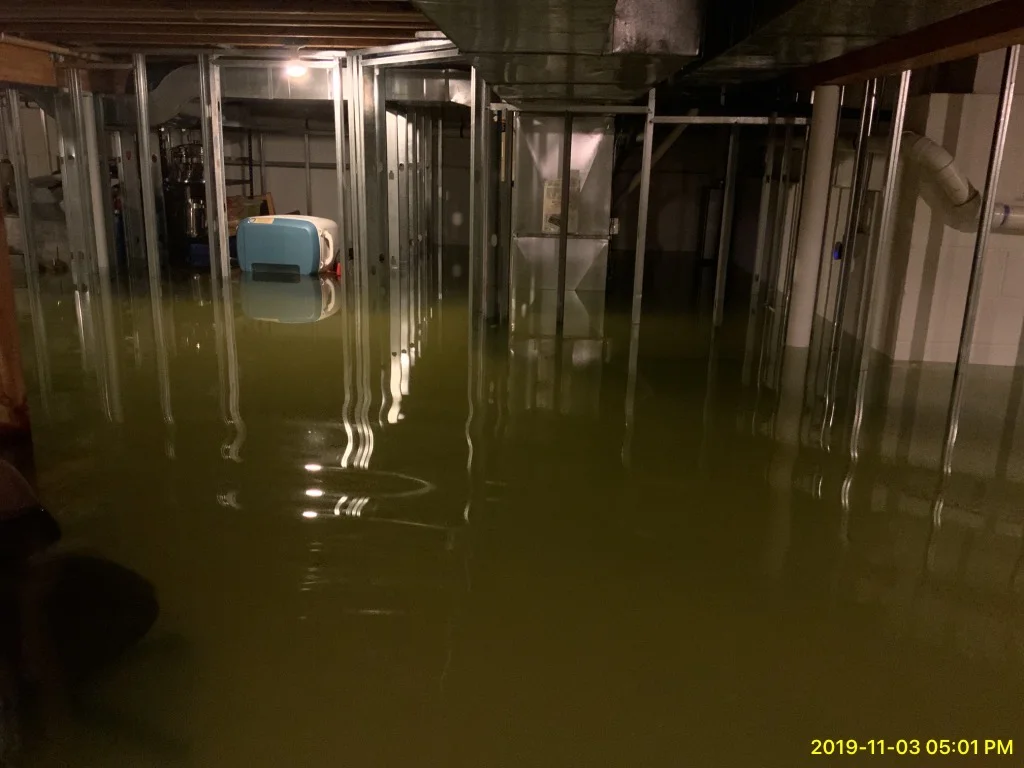
Sump pump failure. Homes with crawl spaces or basement utility areas that rely on sump pumps can experience flooding when pumps fail during extended power outages that frequently accompany major storm events.
What to Do During and After a Storm Event
During the Storm
- Do not enter flooded rooms or areas where water has reached electrical outlets, panels, or plugged-in appliances. Turn off power to affected areas at the breaker if you can safely access the panel.
- Place buckets and towels to minimize accumulation from active roof leaks or window intrusion.
- Move valuables to higher ground. Electronics, documents, and sentimental items should be moved out of at-risk rooms.
- Do not run water-generating appliances — dishwashers, washing machines — that add internal water load when drains may be backed up.
Immediately After the Storm
Document everything before cleanup. Use your phone to photograph and video all visible damage — water stains, pooling, damaged materials, roof or window entry points. This documentation is essential for your insurance claim.
Call a restoration company. Call Tamarack Restoration at (760) 500-2211. We triage calls throughout North San Diego County and dispatch within 60 minutes. Contacting a restoration professional before calling your insurance carrier ensures that proper documentation is in place from the start.
Protect the property from further damage. Your insurance policy likely requires you to take reasonable steps to prevent additional damage after a covered loss. This means tarping roof areas that are open to the sky and boarding broken windows. Restoration companies typically provide emergency tarping and board-up as part of the initial response.
Ventilate if the weather allows. If outdoor humidity is not elevated, opening windows and doors in affected rooms can begin reducing indoor moisture levels. Do not do this if outdoor humidity is high — bringing in moist coastal air will slow structural drying.
The Storm Damage Restoration Process
Emergency Response
The first priority after any storm water intrusion is stopping ongoing water entry — whether that means emergency roof tarping, sealing window gaps, or redirecting exterior drainage. Simultaneously, extraction of any standing water begins.
Moisture Assessment
Thermal imaging cameras and calibrated moisture meters map the full extent of water migration through structural assemblies — through wall cavities, between floor layers, and into ceiling assemblies from roof leaks. This step reveals damage that is invisible to the eye.
Water Extraction and Initial Drying Setup
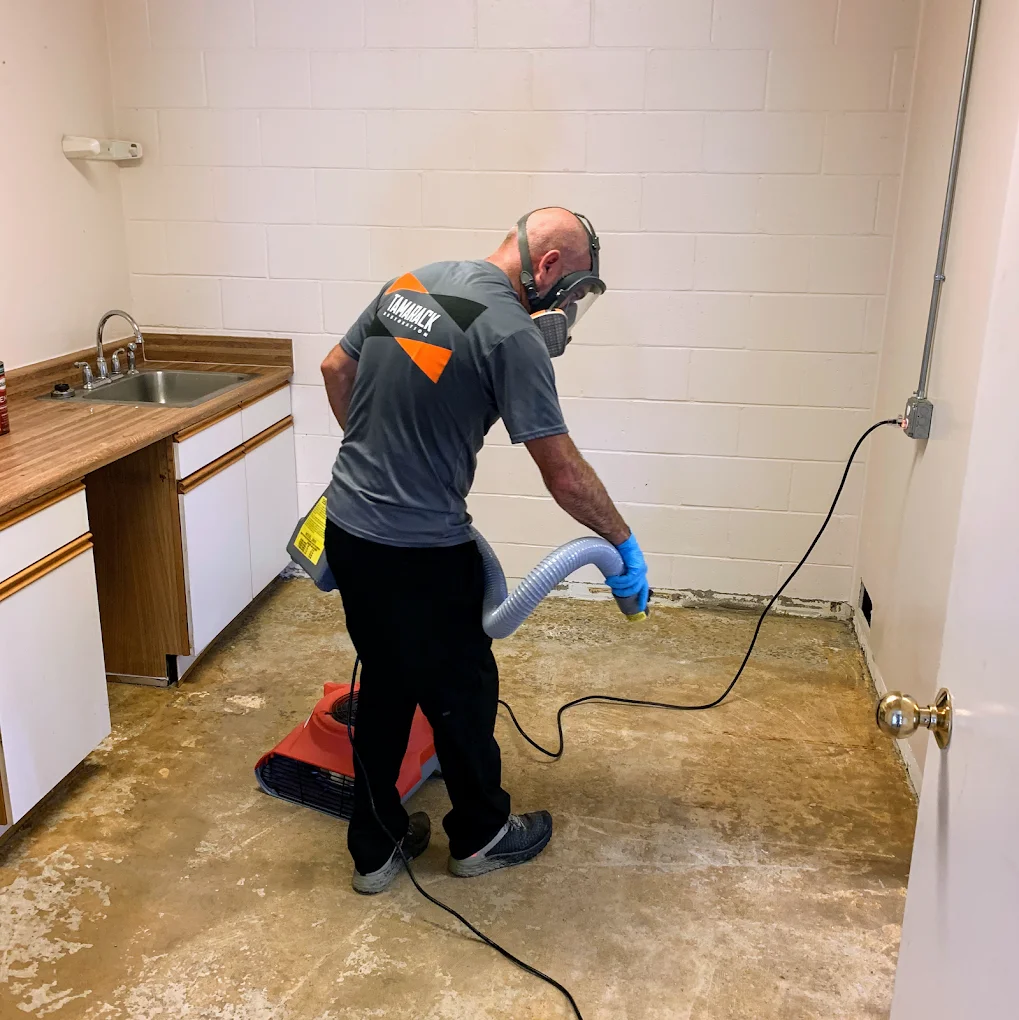
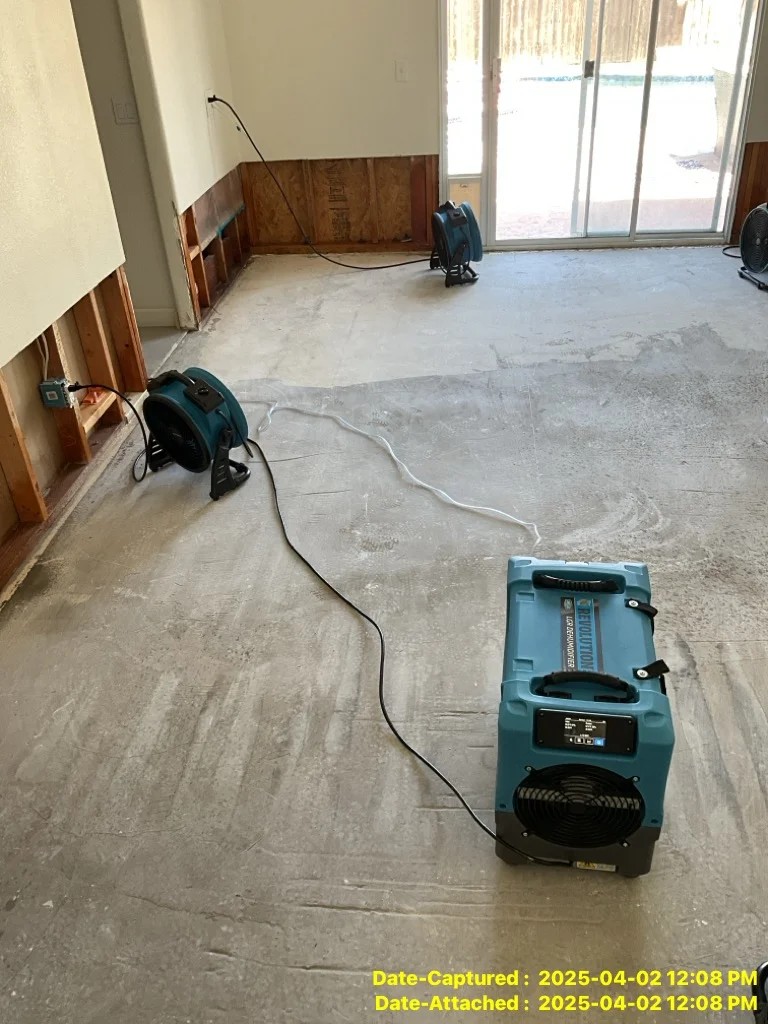
Industrial extraction equipment removes saturated water from carpet, padding, and flooring. Air movers and dehumidifiers are positioned to begin structural drying. In North County’s coastal environment, properly sized equipment is critical because ambient outdoor humidity counteracts the drying differential that the equipment must overcome.
Material Assessment and Demolition
Materials that moisture meters confirm cannot be dried to safe levels within the restoration timeline are removed — drywall, insulation, saturated flooring. Controlled demolition is performed to allow drying equipment to access wall cavities and subfloor spaces.
Monitoring and Documentation
Moisture readings are logged daily at a minimum, typically multiple times per day during active drying. This documentation is required for most insurance claims and demonstrates that drying was performed to IICRC S500 industry standards.
Mold Prevention
All affected areas are treated with EPA-registered antimicrobial solutions during the drying process. In coastal North County homes where ambient spore counts are already higher than inland areas, this treatment is an important part of the protocol — not an optional add-on.
Structural Repairs
Once drying is certified complete and insurance clearance is obtained, the rebuild begins: replacing drywall, insulation, flooring, trim, and roofing or flashing that was the source of entry.
Insurance Coverage for Storm Damage in North San Diego County
Understanding what your policy covers before a storm event is critical. Here is a general summary:
Typically covered under standard homeowners insurance:
- Wind-driven rain entering through structural failure (roof, windows)
- Falling tree or debris damage to the structure
- Internal water damage resulting from a covered roof or window failure
Typically not covered under standard homeowners insurance:
- Flooding from external surface water (groundwater, storm runoff entering the home)
- Drainage backup into the home through floor drains or sewers (requires sewer backup endorsement)
- Damage from a roof that was pre-existing in a deteriorated condition before the storm
Requires separate flood insurance (NFIP or private):
- Any flooding from external water bodies, storm drainage overflow, or surface flooding
If you are in or near a FEMA-designated flood zone in North San Diego County — areas near Buena Vista Lagoon, San Elijo Lagoon, or creek corridors in inland communities — flood insurance is strongly advisable regardless of whether your lender requires it.
Tamarack Restoration works directly with all major homeowners insurance carriers and provides complete documentation packages — photos, moisture logs, scope of work, and drying reports — that your adjuster needs to process your claim accurately.
North San Diego County Storm Response: Ready When You Need Us
When a storm hits Carlsbad, Oceanside, Encinitas, Vista, San Marcos, Solana Beach, or Rancho Santa Fe, Tamarack Restoration is ready to respond. We are locally based in Carlsbad, we know this community, and we are available 24 hours a day, 7 days a week for emergency dispatch.
If you are dealing with storm damage right now, call us at (760) 500-2211. We will be at your door within 60 minutes.
Related Resources
Our services:
- Water Damage Restoration in Carlsbad
- Water Damage Restoration in Oceanside
- Water Damage Restoration in Encinitas
- Flood Cleanup
- Water Damage Restoration
Related articles: