A slab leak is one of the most damaging plumbing failures a Carlsbad homeowner can face — and one of the most misunderstood. Water escaping beneath a concrete foundation causes damage that is invisible until it is already severe, and the coastal soil conditions in Carlsbad accelerate both the failure timeline and the damage progression compared to inland cities. This guide covers everything you need to know: what causes slab leaks in Carlsbad specifically, how to recognize the warning signs, what professional detection involves, and what your repair and restoration options are.
What Is a Slab Leak?
A slab leak is a failure in the copper supply lines that run beneath the concrete foundation of your home. Most Carlsbad homes built before 1990 have copper supply lines embedded in or running under the slab — hot water lines, cold water lines, and in some cases recirculation loops that keep hot water moving through the system continuously. When corrosion, soil movement, or thermal cycling causes one of these pipes to develop a crack or pinhole, water escapes under pressure directly into the soil beneath your foundation and, eventually, up through the slab into your living space.
The reason slab leaks cause disproportionate damage is the same reason they go undetected: the leak is completely hidden. Water migrating beneath a slab has nowhere to go except laterally through the soil and upward through the concrete. By the time surface symptoms appear — a warm spot on the floor, a damp patch of carpet, a faint musty smell at the baseboard — significant moisture has already accumulated beneath the slab and begun wicking into flooring, walls, and cabinetry.
Why Carlsbad Has More Slab Leaks Than Inland Cities
Carlsbad homeowners ask us this question regularly, and the answer involves three factors that are specific to this area.
Coastal soil chemistry. Salt-laden soil along the Pacific coast creates a more corrosive environment for buried copper than the neutral soils found inland. Salt ions accelerate the electrochemical corrosion process on copper pipe surfaces, producing pinholes at a measurably faster rate. Properties west of El Camino Real — particularly in Carlsbad Village, Olde Carlsbad, and along the Batiquitos Lagoon corridor — sit in the highest-corrosion-rate zone in the city.
Aging copper infrastructure. Carlsbad Village and Olde Carlsbad contain a large inventory of homes built in the 1960s and 1970s. The copper supply lines in these homes are now 50 to 60 years old — at or beyond their design life under normal conditions, and past it in a coastal salt-air environment. We regularly find pinhole clusters on pipe runs in these neighborhoods where corrosion has advanced to the point that repairing individual leaks is not a viable long-term solution.
Soil movement in master-planned communities. La Costa, Aviara, Rancho Carrillo, and Bressi Ranch were built on engineered fill over native soils. Seasonal moisture variation causes this fill to expand and contract, flexing copper pipe at elbows and tee fittings over years. This process — called thermal and mechanical fatigue — causes cracks at joints rather than the corrosion-driven pinholes seen in older neighborhoods. It affects newer construction too: we have detected slab leaks in Bressi Ranch homes built in the 2000s where recirculation loop copper failed at a fitting from thermal cycling rather than age-related corrosion.
Warning Signs of a Slab Leak in a Carlsbad Home
The sooner you identify a slab leak, the less damage it causes and the lower your restoration cost. Watch for these indicators:
Warm or hot spots on the floor. Most slab leaks involve hot-water supply lines. When hot water escapes beneath the slab, it heats the concrete above it. A patch of floor that feels noticeably warmer than surrounding areas — especially when the heating is not running — is one of the most reliable early indicators. In Carlsbad homes with tile or hardwood floors, this is often the first symptom homeowners notice.
The sound of running water with all fixtures off. Pressurized water escaping a pipe beneath the slab produces a faint sound that travels through the concrete. If you hear what sounds like water running or a faint hiss when every faucet, toilet, and appliance in the home is off, call a leak detection professional immediately. Do not wait to see if it resolves.
An unexplained increase in your water bill. A slab leak can discharge hundreds of gallons per day, all of it charged to your water account. A water bill that is 15% or more above your normal usage without any change in habits is a strong indicator of an active leak somewhere in the supply system. Shut off the main and watch your water meter — if the dial continues to move with everything off, you have an active leak.
New cracks in floor tile or the foundation. Moisture accumulating beneath a slab changes the soil bearing conditions and can cause the slab to shift slightly, cracking tile at grout lines or producing hairline cracks in the concrete itself. This is a later-stage symptom, meaning damage has been progressing for some time.
Damp or buckled flooring with no visible source. Hardwood flooring that cups, buckles, or shows discoloration without any visible water event is often the result of moisture wicking upward from a slab leak beneath. In Carlsbad’s coastal environment, this moisture cannot evaporate, so it accumulates continuously in the flooring material.
Mold or mildew smell at baseboards. When moisture from a slab leak reaches the base of drywall, it wicks upward through the paper facing and creates conditions for mold growth inside the wall cavity. A persistent musty odor at floor level, especially along exterior walls or in utility areas, is worth investigating.
How Professional Slab Leak Detection Works
Many homeowners assume slab leak detection requires tearing up flooring. It does not — at least not before the leak is located. Professional detection uses three non-invasive technologies that pinpoint the leak through the slab before any access is made.
Electronic pressure testing isolates the leak to a specific supply line and zone. We shut off branches of the supply system independently and measure pressure drop to confirm an active leak and narrow its location to a specific pipe run. This step alone can eliminate half the property from investigation before any detection equipment is deployed.
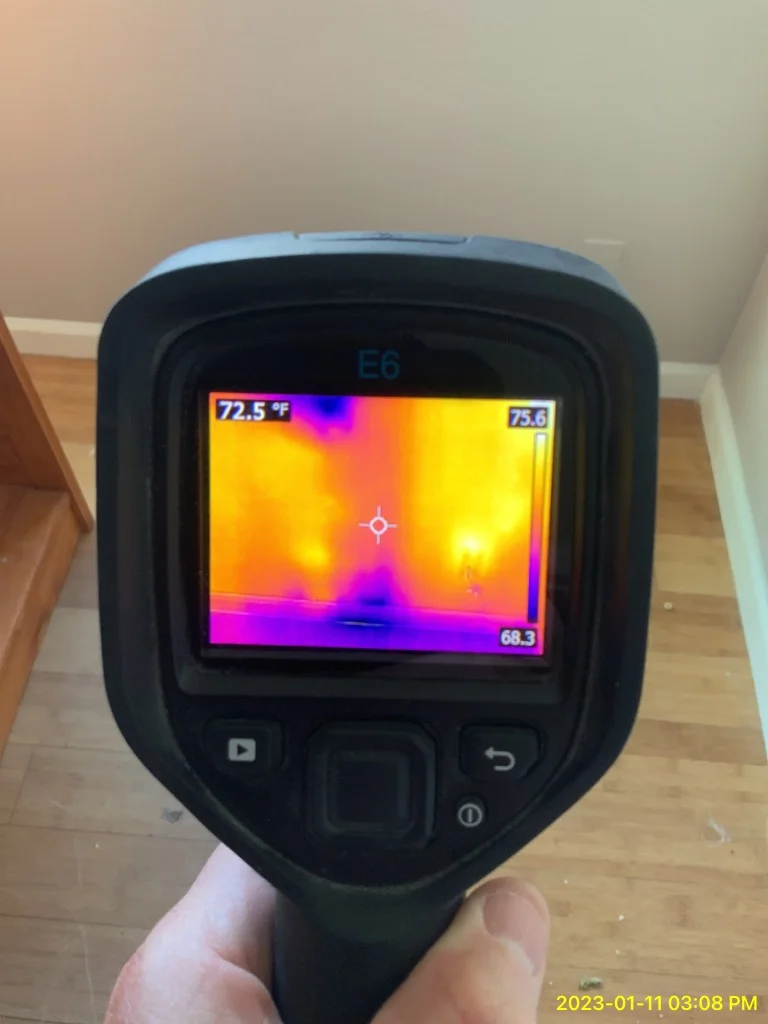
Thermal imaging scans floor surfaces for temperature anomalies caused by hot water escaping beneath the slab. Infrared cameras detect even a half-degree temperature differential — enough to identify a slab leak through tile, hardwood, or carpet without contact. In Carlsbad homes with in-floor radiant heating, we use baseline temperature mapping to distinguish leak signatures from heating system patterns.
Acoustic listening equipment amplifies the sound of pressurized water escaping through pipe cracks. Ground microphones and electronic amplifiers listen through the concrete for the distinct acoustic signature of a pressurized leak — different from normal water flow and identifiable through the slab surface. Combined with thermal imaging, acoustic detection allows us to mark the leak location within inches before opening anything.
The result is a precise repair target. Rather than cutting a trench across the floor to find the pipe, we make a single targeted access point at the confirmed leak location — minimizing floor damage and repair cost.
Slab Leak Repair Options
Once the leak is located, there are three repair approaches. The right choice depends on pipe age, pipe material, leak location, and the overall condition of the supply system.
Direct access repair is appropriate when the pipe is in otherwise good condition and the leak is isolated to a single point. We cut a precise opening at the confirmed leak location, repair or replace the damaged pipe section, restore the concrete, and patch the flooring. For Bressi Ranch homes with newer copper and a single-point failure, this is typically the most cost-effective approach.
Pipe rerouting bypasses the damaged slab section entirely by running a new supply line through walls or the attic to the affected fixture. This is appropriate for older Carlsbad Village and Olde Carlsbad homes where the slab copper is extensively corroded and repairing individual leaks will not prevent future failures. Rerouting eliminates the slab penetration risk permanently on the rerouted line. It costs more upfront but avoids repeat repairs on a failing system.
Epoxy pipe lining coats the interior of existing pipes with an epoxy resin that seals pinholes and corrosion without physical access. This approach is appropriate for specific pipe configurations where access is difficult and the pipe structure is intact enough to support lining. It is less commonly applicable to residential slab situations than the options above, but it is available for the right circumstances.
What Happens After the Pipe Is Repaired
This is where most plumbing-only contractors stop — and where Tamarack Restoration continues. After the pipe is repaired, we conduct a full moisture assessment of the surrounding structure using calibrated moisture meters and thermal imaging. We map every square foot of water migration: beneath the flooring adjacent to the repair, inside wall cavities, under cabinetry, and in any structural assembly that the leak water could have reached.
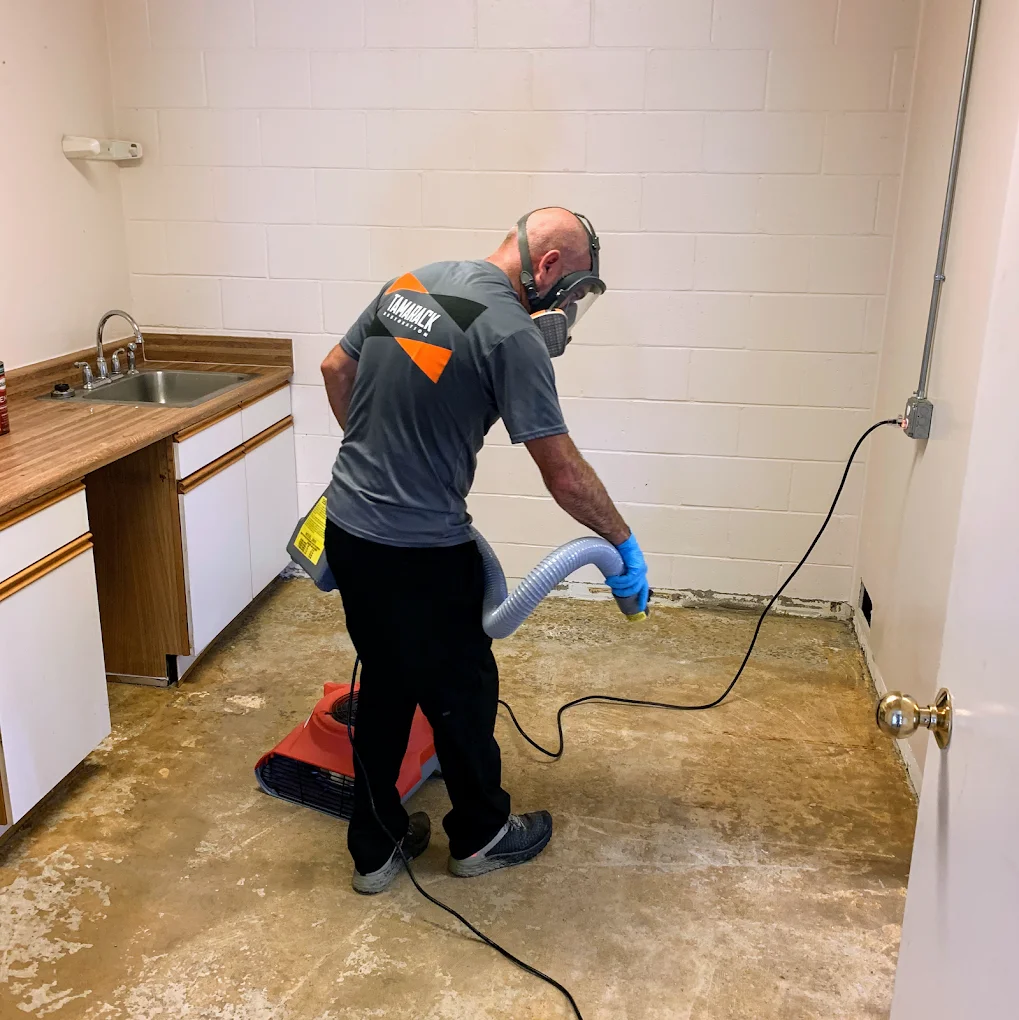
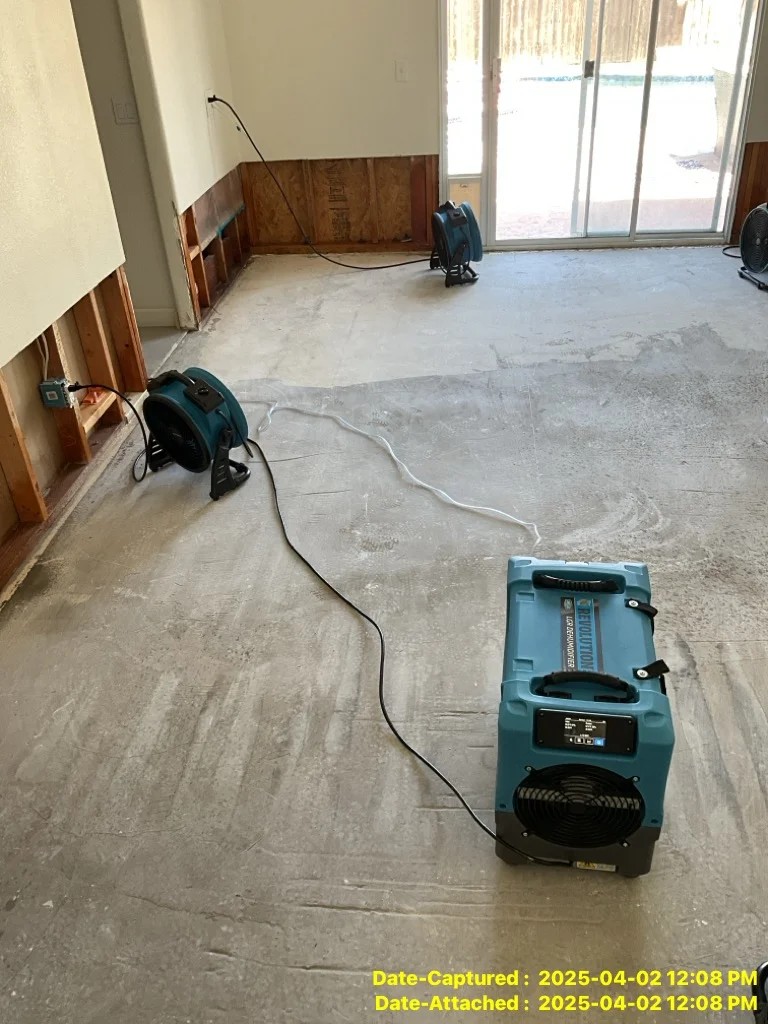
Wet materials are dried with commercial dehumidifiers and high-velocity air movers. We take daily moisture readings until every affected material reaches its target dryness level. If mold has established during the leak period, we conduct remediation before drying is complete to prevent further spread.
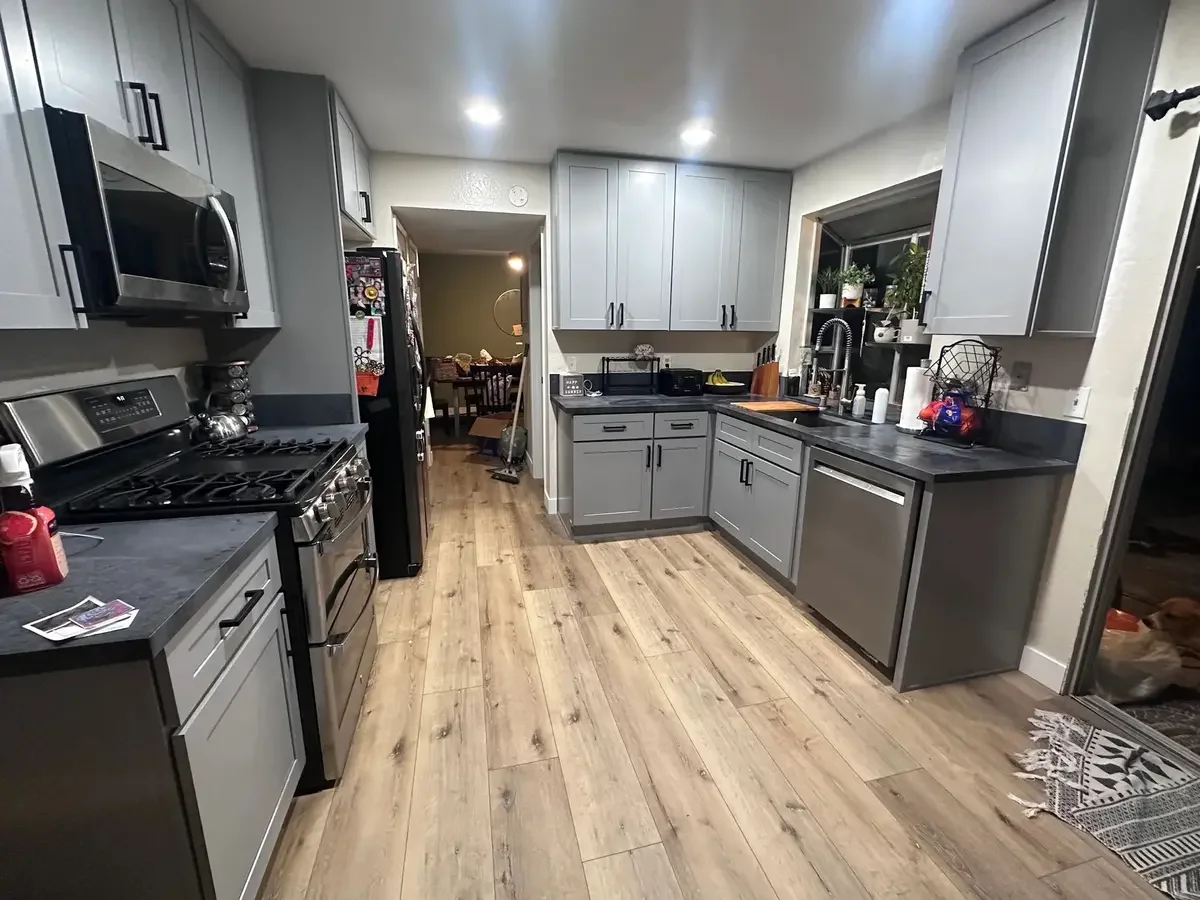
Flooring, tile, drywall, and cabinetry affected by the leak are restored to pre-loss condition. In Carlsbad homes with custom tile or wide-plank hardwood, we source matching materials and perform repairs that are visually indistinguishable from the original installation.
Insurance Coverage for Slab Leaks in Carlsbad
Most Carlsbad homeowner insurance policies cover the water damage caused by a slab leak — the saturated flooring, walls, and cabinetry — but coverage for the pipe repair itself varies by policy. The critical documentation that determines claim approval is the moisture evidence: thermal images showing the extent of water migration, moisture meter readings at every affected point, and a written findings report that establishes the connection between the pipe failure and the structural damage.
We provide all of this documentation as part of every slab leak investigation and repair project. We work directly with adjusters from every major carrier serving Carlsbad — State Farm, USAA, Farmers, Allstate, and Liberty Mutual — and we manage the entire claims process so you deal with the restoration, not the paperwork. Most Carlsbad homeowners with a covered policy pay only their deductible.
How Quickly Should You Act?
The answer is immediately. Every hour a slab leak runs increases the volume of moisture beneath your slab, the extent of water migration into flooring and walls, and the likelihood of mold establishment. In Carlsbad’s coastal environment — where humidity prevents evaporation from wall cavities — mold can begin growing within 48 hours of the first moisture contact with drywall.
If you notice any of the warning signs described in this article, call Tamarack Restoration at (760) 500-2211. We dispatch from our Carlsbad headquarters on El Camino Real 24 hours a day, 7 days a week, and average 35 minutes to most Carlsbad addresses. We carry thermal imaging cameras and acoustic detection equipment on every truck, so investigation begins the moment we arrive.
For more information about our slab leak repair services throughout North San Diego County, visit our slab leak repair service page or find city-specific information for Carlsbad, Oceanside, Encinitas, Vista, and San Marcos.