The Crawl Space Problem Most San Diego Homeowners Don’t Know They Have
A significant number of San Diego County homes — particularly mid-century properties in Carlsbad, Oceanside, Encinitas, Vista, and the hill communities of Rancho Santa Fe and San Marcos — are built over crawl spaces. These shallow, low-clearance areas beneath the floor framing provide access to plumbing and HVAC systems, but they also create conditions where mold thrives and grows, often for years, without the homeowner knowing.
The reason crawl space mold is so common here: the combination of San Diego County’s soil moisture, coastal humidity, and inadequate crawl space ventilation creates an environment where the wood framing, insulation, and subfloor materials stay chronically damp. Add in the warm temperatures that rarely drop below 50°F year-round, and mold has everything it needs to grow.
The reason it matters beyond the crawl space itself: mold spores and contaminated air from the crawl space do not stay there. They move upward into your home.
How Crawl Space Mold Gets Into Your Living Space
This is called the stack effect, and it is one of the most important concepts in understanding why crawl space mold affects your family’s health even when you never enter the crawl space.
Buildings create natural air pressure differentials. Warm air rises, and as it escapes through the upper portions of a home, it draws replacement air upward from below — including air from the crawl space. Research from building science organizations suggests that up to 50% of the air in the lower floors of a home with a crawl space has passed through the crawl space itself.
This means:
- Mold spores present in crawl space air enter the home’s breathing environment
- Musty odors generated by mold growth below migrate upward
- Elevated crawl space humidity raises indoor relative humidity on lower floors
- VOCs released by mold metabolism can be present in indoor air
Crawl space mold is not a “separate” problem from indoor air quality. It is a direct contributor to the air your family breathes every day.
Signs of Crawl Space Mold in Your San Diego Home
Musty or earthy odor, especially near the floor. If the musty smell is stronger near baseboards, floor vents, or floor-level areas of the home than at head height, it is likely coming from below.
Softness or springiness in wood floors. When subfloor sheathing becomes saturated with moisture and begins to decay, the floor above it will feel slightly soft or “bouncy” underfoot. This is an advanced sign that structural materials are being degraded.
Visible moisture or staining near the foundation. Efflorescence (white mineral deposits) or dark staining near crawl space vents or at the base of interior walls near the perimeter can indicate chronic moisture intrusion from the soil.
Increased respiratory symptoms. Occupants experiencing worsening allergy symptoms, respiratory irritation, or asthma that improves during time away from the home may be reacting to elevated indoor spore counts originating from the crawl space.
HVAC ducts in the crawl space. Homes with duct systems running through the crawl space have a direct pathway for mold spores and contaminated air to enter the forced-air system and be distributed throughout the home. This is a particularly serious configuration.
History of plumbing leaks or drainage issues. Any plumbing that runs through the crawl space — drain lines, supply lines, water heater connections — can leak and saturate the crawl space environment for extended periods before detection.
Why San Diego County Crawl Spaces Are High-Risk
Soil moisture. The soils in much of coastal North San Diego County retain significant moisture, particularly during the rainy season (November through March) and in areas with high water tables near the coast. This soil moisture evaporates upward into the crawl space continuously throughout the year.
Inadequate vapor barriers. Many older homes have no vapor barrier, or have a thin plastic sheeting that has deteriorated or been punctured over decades. Without an effective vapor barrier, soil moisture enters the crawl space unimpeded.
Vented crawl spaces with insufficient airflow. California’s older building codes required vented crawl spaces, relying on cross-ventilation to manage moisture. In practice, venting provides inconsistent results and in high-humidity coastal environments can actually bring in humid outdoor air that worsens conditions in the crawl space.
Insulation degradation. Fiberglass batt insulation between floor joists, when it becomes saturated with moisture, loses its R-value, sags, and becomes a growing medium for mold. Wet insulation is often where the most significant mold growth begins in crawl spaces.
The Professional Crawl Space Mold Remediation Process
Inspection and Assessment
Remediation begins with a thorough inspection — often using a borescope camera if access is limited — to document the extent of mold growth, assess moisture levels in structural materials, identify the moisture sources, and determine what materials need to be removed.
Containment and Safety
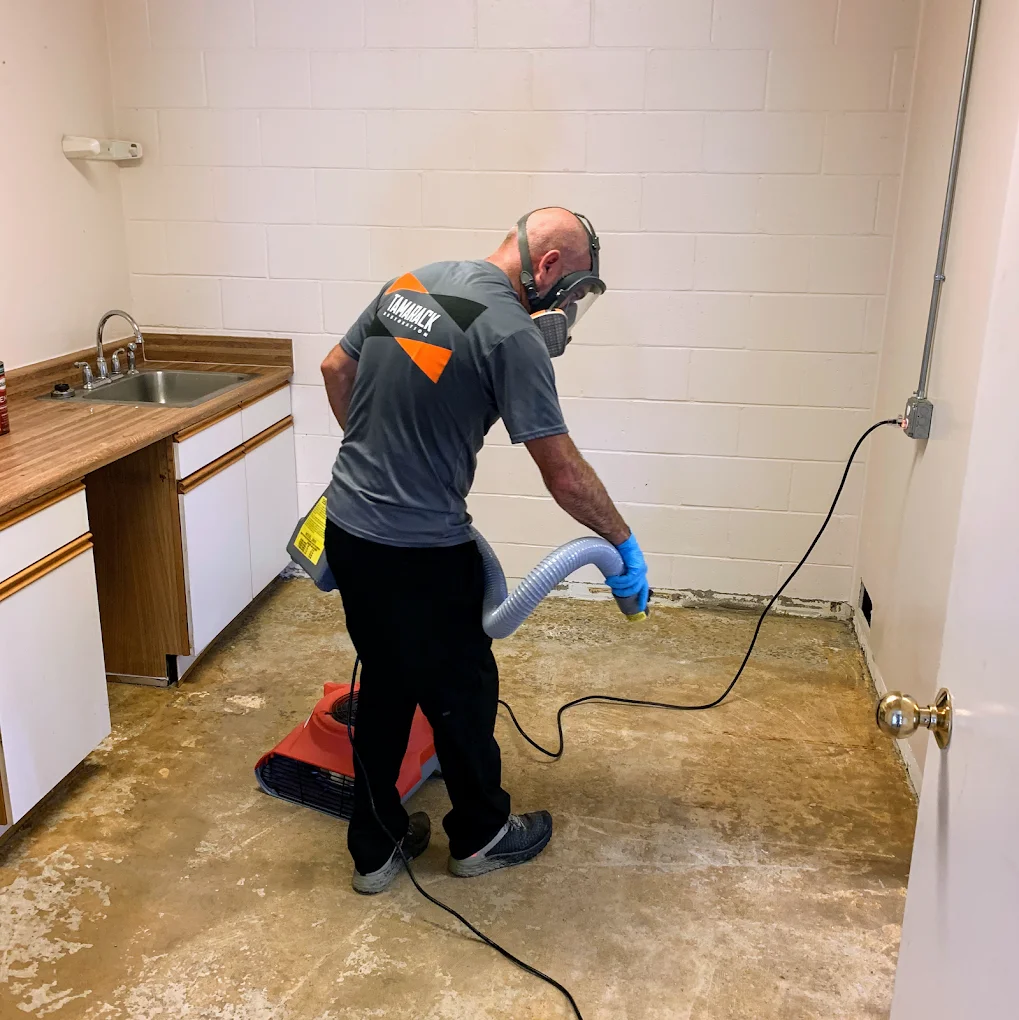
Technicians establish containment to prevent disturbing mold spores in the crawl space from migrating upward into the living space in greater quantities during work. Full PPE is required for all work inside the crawl space.
Material Removal
Saturated or heavily contaminated insulation is removed and properly disposed. Degraded vapor barriers are removed and discarded. Debris is cleared.
Surface Treatment
Wood framing surfaces with mold growth are wire-brushed, HEPA-vacuumed, and treated with EPA-registered antimicrobial solutions. For particularly dense growth, encapsulating sealers may be applied to lock in any residual spores after treatment.
Structural Drying
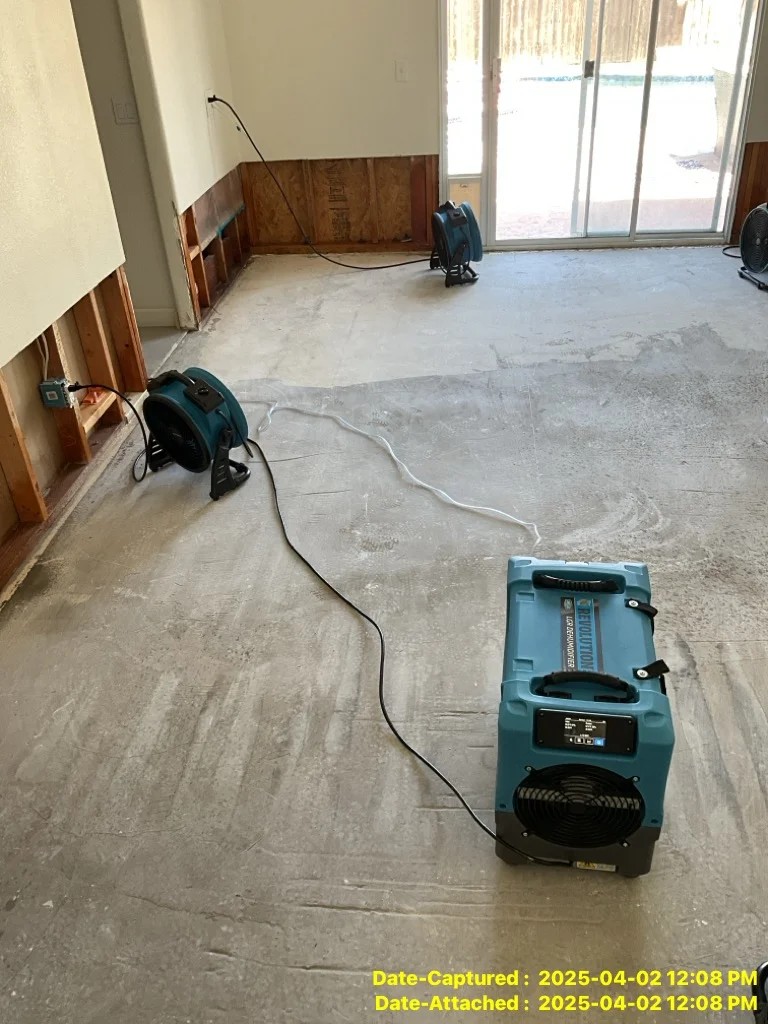
Industrial dehumidifiers reduce crawl space humidity to target levels and accelerate drying of structural materials. In some configurations, temporary ventilation is used to exhaust humid air.
Vapor Barrier and Encapsulation
Following remediation, a new heavy-duty vapor barrier (typically 20-mil cross-laminated polyethylene) is installed across the entire crawl space floor, lapped up the foundation walls and secured. For maximum moisture control, full encapsulation — sealing all vents and installing a dedicated crawl space dehumidifier — is recommended. This transforms the crawl space from a vented, uncontrolled environment into a sealed, conditioned space.
Post-Remediation Verification
Air and surface sampling confirms that spore counts are within normal ranges and remediation was successful. This clearance documentation is provided to the homeowner.
Cost of Crawl Space Mold Remediation in North San Diego County
| Scope | Typical Cost Range |
|---|---|
| Small crawl space, limited growth, no encapsulation | $3,000 – $6,000 |
| Mid-size crawl space, significant growth, vapor barrier replacement | $6,000 – $12,000 |
| Large crawl space or severe growth, full encapsulation | $10,000 – $20,000+ |
These are estimates. Actual costs depend on crawl space size, accessibility, severity of growth, and scope of moisture control improvements. Tamarack Restoration provides free on-site assessments throughout North San Diego County.
Preventing Crawl Space Mold Recurrence
Remediation alone is not sufficient if the underlying moisture problem isn’t corrected. Post-remediation moisture control steps include:
- Vapor barrier installation or replacement — effective soil moisture control is the foundation of a healthy crawl space
- Full encapsulation — considered best practice for most North County homes
- Dedicated crawl space dehumidifier — maintains target humidity year-round
- Plumbing inspection — addressing any existing or potential leaks
- Grading and drainage review — ensuring surface water drains away from the foundation
Homes that invest in comprehensive moisture control after remediation rarely see recurrence. Homes where only the mold is treated without addressing the moisture are likely to see new growth within two to three years.
Scheduling a Crawl Space Inspection in North San Diego County
If you haven’t had your crawl space inspected in the past five years — or ever — now is a good time. Tamarack Restoration performs crawl space mold assessments throughout Carlsbad, Oceanside, Encinitas, Vista, San Marcos, Solana Beach, and Rancho Santa Fe. Call us at (760) 500-2211 or reach out through our website to schedule an assessment.
Related Resources
Our services:
- Mold Removal in Carlsbad
- Mold Removal in Encinitas
- Mold Removal in Oceanside
- Leak Detection
- Mold Removal Services
Related articles: