Water Damage in Encinitas: What Every Homeowner Should Know
Encinitas homeowners face a distinct set of water damage risks. The city’s coastal location — spanning from the beaches of Moonlight and Swami’s west to the canyons and hillside neighborhoods east of I-5 — creates a moisture environment that is more challenging than most of inland San Diego County. Higher ambient humidity, marine layer fog, aging building stock, and hillside drainage patterns all contribute to a water damage risk profile that is unique to this stretch of the North County coast.
At the same time, water damage here follows the same rule it follows everywhere: the faster you respond, the less damage occurs and the lower your costs will be. This guide is designed to help Encinitas homeowners understand what to do, what to expect, and who to call when water damage strikes.
Common Water Damage Scenarios in Encinitas
Supply line and appliance failures. Washing machine hoses, refrigerator ice maker lines, and toilet supply lines are among the most common sources of sudden water damage in any home. In Encinitas, the higher ambient humidity means any undetected slow drip or small leak has a significantly higher chance of developing into mold before it is noticed.
Slab leaks. Encinitas has a large stock of mid-century homes with copper plumbing that is now 40 to 60 years old. As copper pipes age and the soil beneath slabs shifts, pinhole leaks and full pipe failures within the slab become increasingly common. Slab leaks are particularly destructive because the water migrates upward through the concrete, saturating flooring from below, and can spread horizontally through the slab before surfacing.
Roof leaks during winter storms. When atmospheric rivers bring heavy rain to the coast, older roofing systems in Encinitas can fail. Water intrusion through roofing typically damages attic insulation, ceiling drywall, and can travel inside wall cavities to lower floors.
Window and stucco intrusion. Many Encinitas homes have older single-pane windows and stucco exteriors that were never designed to manage the chronic moisture exposure of a coastal marine layer environment. Window flashing failures and cracked stucco can allow water to enter wall cavities slowly over years, creating widespread moisture damage and mold that is only discovered during renovation or a real estate inspection.
Plumbing in hillside homes. Encinitas’s canyon and hillside neighborhoods east of El Camino Real have complex plumbing configurations that can be difficult to access and inspect. Pipe failures in these homes sometimes go undetected longer than in single-story properties, increasing the extent of damage.
The First 60 Minutes: What to Do
1. Stop the water source. If the damage is from a burst pipe or appliance failure, locate and close the shutoff valve immediately. For a washing machine, use the individual hose shutoffs or the main house shutoff. For a toilet or sink, use the under-fixture shutoff valve. If you cannot identify or reach the shutoff valve, turn off the main water supply.
2. Remove standing water if it is safe to do so. Mopping and toweling small amounts of clean water from hard floors can reduce damage while you wait for professional help. Do not enter areas with standing water near electrical outlets or panels.
3. Document everything before moving anything. Use your phone to video and photograph the full extent of visible damage. Walk through all affected rooms. This documentation is essential for your insurance claim.
4. Call your restoration company. Call Tamarack Restoration at (760) 500-2211. We dispatch within 60 minutes throughout Encinitas and North San Diego County, 24 hours a day. Call us before calling your insurance company — our assessment documentation gives your adjuster a complete picture from the start.
5. Call your insurance company. Once you have called a restoration professional, notify your insurance carrier to open a claim. Have your policy number and the above documentation ready.
6. Move valuables and elevate furniture if possible. Move documents, electronics, rugs, and personal items out of the affected area. Plastic cups or aluminum foil under furniture legs can reduce staining on wet carpet.
How Water Damage Restoration Works in Encinitas
Professional restoration follows a structured process:
Assessment and moisture mapping. Thermal imaging cameras and calibrated moisture meters map the full extent of water migration — including inside walls, under floors, and in ceiling cavities — that is invisible to the naked eye. This map drives all decisions about what to dry in place and what materials must be removed.
Water extraction. Industrial truck-mounted and portable extraction units remove standing water and then extract water from carpet, padding, and subfloor materials. This step dramatically accelerates subsequent drying.
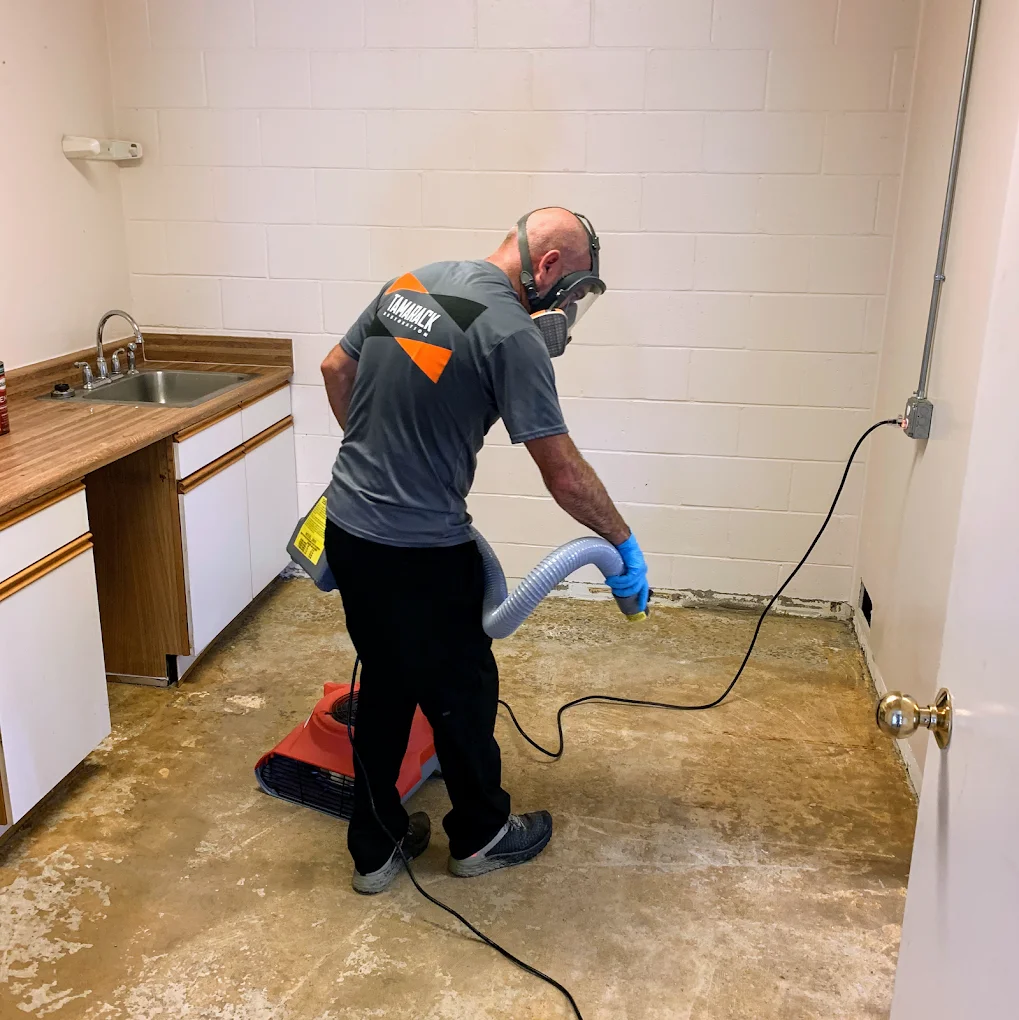
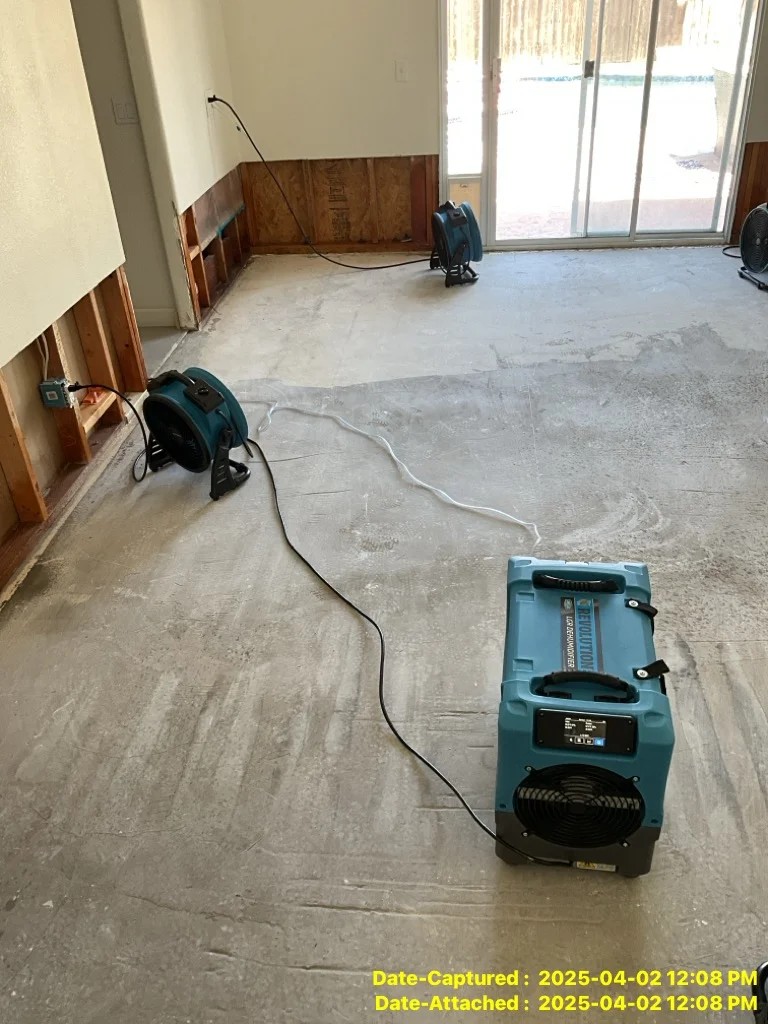
Structural drying. Industrial air movers and low-grain refrigerant dehumidifiers create the airflow and humidity differential needed to dry structural materials. In Encinitas’s coastal environment, higher outdoor humidity means equipment must be sized appropriately to overcome ambient moisture. Our technicians monitor moisture levels daily and adjust equipment placement as needed.
Antimicrobial treatment. All affected areas are treated with EPA-registered antimicrobial solutions to prevent mold growth during the drying period — particularly important in Encinitas where ambient mold spore counts are higher than in inland areas.
Material removal when needed. When moisture readings indicate that structural materials — drywall, insulation, flooring — cannot be dried in place to safe levels within the restoration timeline, controlled demolition removes the affected materials. This is necessary to prevent trapped moisture from causing mold growth after drying equipment is removed.
Documentation. Daily moisture readings are logged and provided to your insurance carrier. This documentation shows that drying was performed to IICRC S500 standards — the industry benchmark for water damage restoration.
Rebuild. Once structure is certified dry and cleared by your insurer, the repair process begins: replacing drywall, flooring, insulation, cabinetry, and any other affected finishes.
Coastal Humidity and Why It Matters for Drying
Encinitas’s average relative humidity is significantly higher than inland San Diego County, particularly during the spring marine layer season (May through July) and in mornings throughout the year. This matters for water damage restoration because structural drying works by creating a vapor pressure differential — wet materials release moisture into air that is less humid than the material itself.
When outdoor humidity is high and air is exchanged through windows or HVAC systems, drying equipment must work harder to maintain the interior conditions needed for effective structural drying. Inadequately sized or improperly deployed drying equipment in a coastal environment can result in drying times that stretch beyond industry standards, increasing both cost and mold risk.
Tamarack Restoration technicians understand the coastal drying environment and deploy equipment appropriately for the conditions specific to Encinitas homes.
Insurance Coverage for Encinitas Water Damage
Standard California homeowners insurance covers sudden and accidental water damage from internal sources. What is typically covered:
- Burst pipes
- Appliance failures (washing machine, dishwasher, refrigerator)
- Plumbing failures above the slab
- Roof leaks (often subject to maintenance exclusions)
What is typically not covered:
- Gradual leaks (drips that continued for weeks or months)
- Slab leaks may have coverage complications depending on your policy language
- Flooding from outside the home (requires separate NFIP or private flood policy)
- Damage from deferred maintenance
Tamarack Restoration works directly with all major carriers serving the Encinitas market — State Farm, Allstate, Farmers, USAA, and Liberty Mutual. We provide the documentation your adjuster needs to process your claim accurately and efficiently.
If you are experiencing water damage in Encinitas right now, call us at (760) 500-2211. We are available 24/7 and typically on-site within 60 minutes.
Related Resources
Our services:
- Water Damage Restoration in Encinitas
- Mold Removal in Encinitas
- Leak Detection
- Water Leak Repair
- Slab Leak Repair in Encinitas
Related articles: