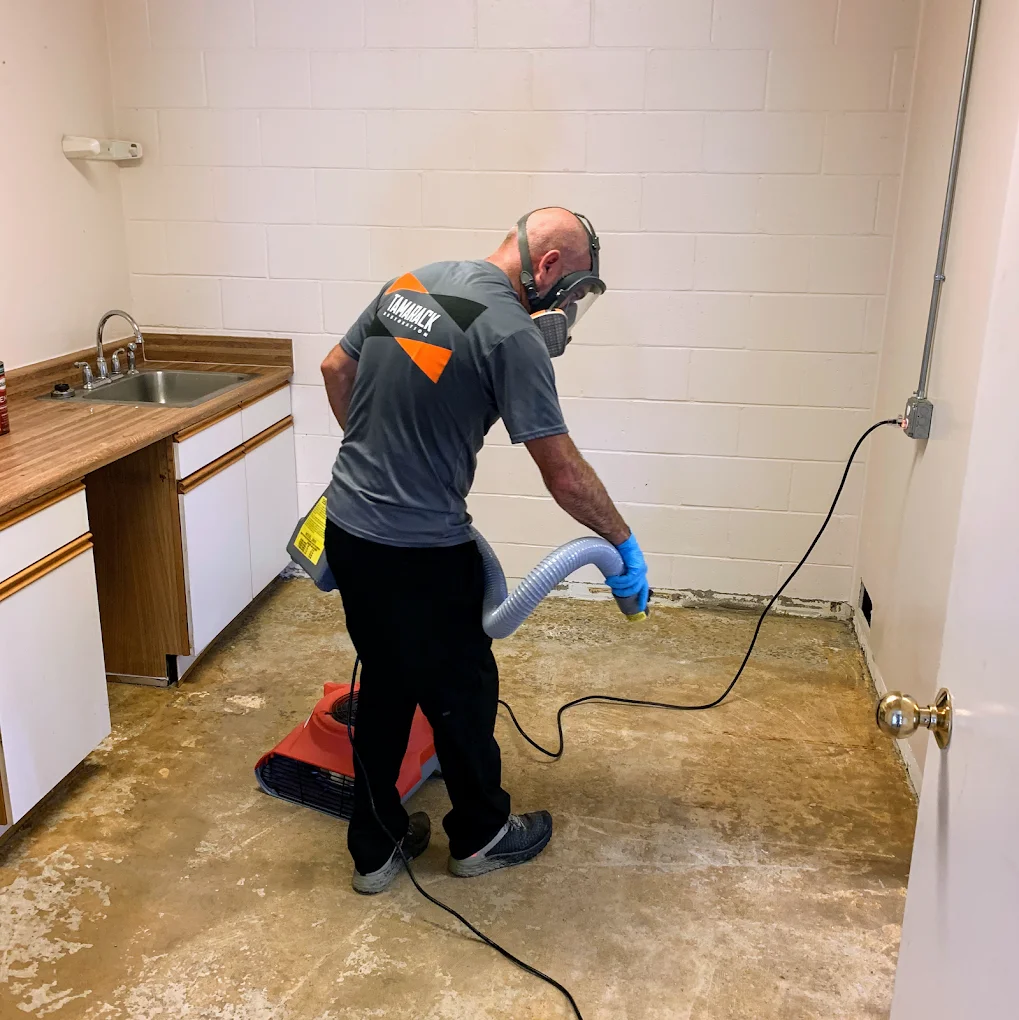
Professional Mold Removal in North San Diego County
Safe, thorough mold remediation that protects your health and property.
Get Help Now
60-minute emergency response
Your information is secure and never shared
Why Mold Removal Requires Professional Attention
Mold isn't just unsightly—it's a health hazard that can cause respiratory problems, allergic reactions, and other serious health issues. Once mold takes hold, it spreads quickly through spores that travel through your HVAC system, contaminating areas far from the original source. DIY removal often makes things worse by disturbing spores without proper containment.
Professional mold remediation requires specialized training, equipment, and protocols. We contain affected areas to prevent spore spread, use HEPA filtration to clean the air, and remove mold at its source. Most importantly, we identify and fix the moisture problem that caused the mold, ensuring it doesn't return.
Our Mold Removal Process
IICRC-certified approach to completely restore your property.
Inspection & Testing
We identify all mold locations, determine the type, and find the moisture source causing growth.
Containment
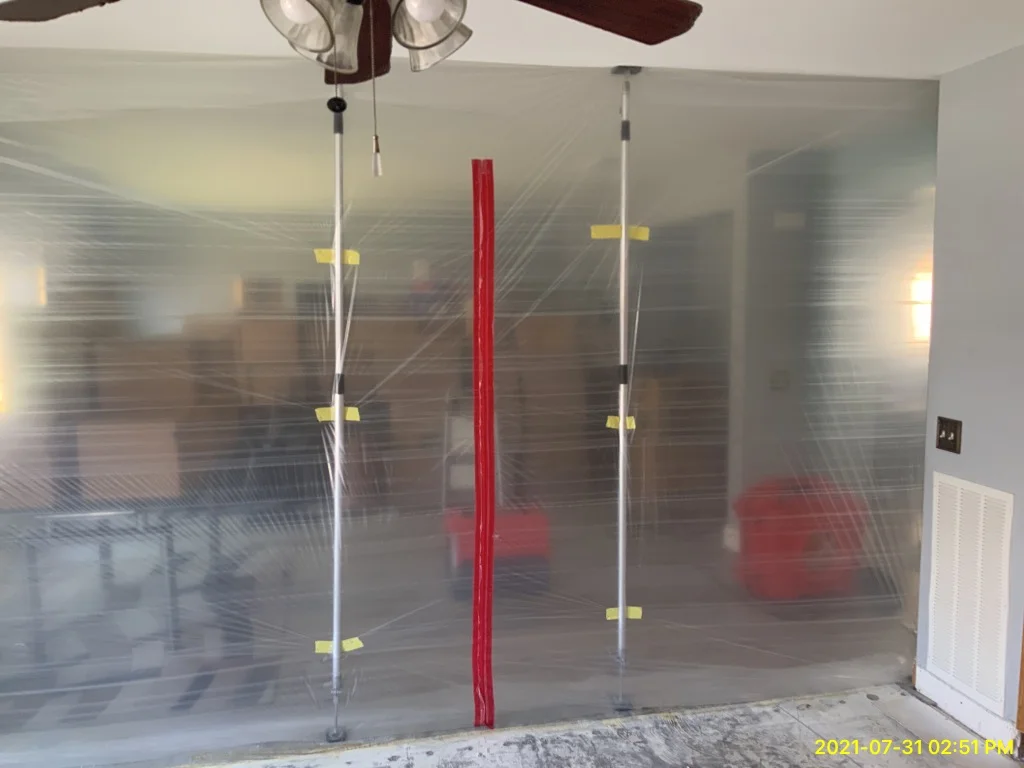
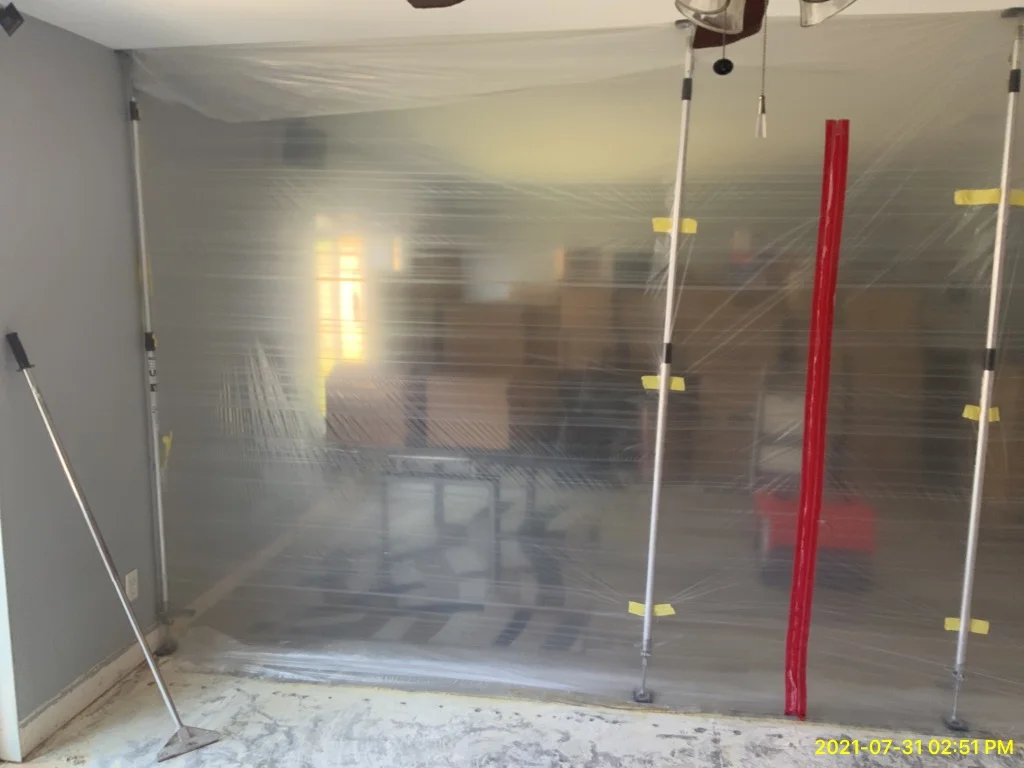
Plastic barriers and negative air pressure prevent spores from spreading to clean areas during removal.
HEPA Air Filtration
Industrial air scrubbers with HEPA filters capture airborne spores throughout the remediation process.
Mold Removal
We remove mold-damaged materials and treat surfaces with antimicrobial solutions.
Moisture Correction
We fix the water intrusion or humidity problem that caused mold growth in the first place.
Clearance Testing
Post-remediation testing verifies mold levels are back to normal before we finish.
Warning Signs
Watch for these signs that you may need mold removal:
- Visible mold growth (black, green, white spots)
- Musty or earthy odors
- Recent water damage or flooding
- Allergic symptoms that improve when away from home
- Condensation on windows
- Peeling or bubbling paint
Common Causes
Mold Removal is often caused by:
- Previous water damage not fully dried
- High humidity (above 60%)
- Poor ventilation in bathrooms and kitchens
- Roof or plumbing leaks
- Condensation on windows and pipes
- Flooding or storm damage
Why Choose Tamarack for Mold Removal?
Health-Focused Approach
We prioritize your family's health with proper containment, PPE, and air filtration throughout the process.
Find & Fix the Source
We don't just remove mold—we find and fix the moisture problem so mold doesn't come back.
Clearance Testing Included
We verify our work with post-remediation testing, giving you documented proof the mold is gone.
When to Call for Mold Removal
Recognize these situations? Call Tamarack at (760) 500-2211 for immediate help.
You Can See Visible Mold Growth on Walls or Ceilings
Visible mold colonies on drywall, ceiling tiles, or wood framing indicate an active moisture problem that has been present long enough for spores to colonize. Surface mold you can see almost always means more extensive growth behind the wall or above the ceiling. Do not attempt to clean it with bleach or household products, as disturbing the colony without proper containment spreads spores throughout your HVAC system and into unaffected rooms.
Your Home Has a Persistent Musty or Earthy Smell
Mold produces microbial volatile organic compounds (MVOCs) as it digests organic materials, creating that distinctive musty, earthy odor. If you notice this smell consistently in certain rooms, closets, or near HVAC vents, there is likely concealed mold growth somewhere in the air pathway. The odor often intensifies in humid conditions or when the HVAC system cycles on, pulling contaminated air from affected wall cavities into your living space.
You or Your Family Are Experiencing Unexplained Allergy Symptoms
Chronic nasal congestion, sneezing, itchy eyes, headaches, or respiratory irritation that improves when you leave the house and returns when you come home is a classic pattern of mold exposure. Children, elderly family members, and individuals with asthma or compromised immune systems are particularly sensitive to airborne mold spores. A professional mold inspection can determine whether elevated spore counts in your indoor air are the cause.
You Recently Had Water Damage That Was Not Professionally Dried
If your home experienced a leak, flood, or plumbing failure in the past and the cleanup was handled without commercial drying equipment, there is a high probability that residual moisture in wall cavities, subfloors, or insulation has led to concealed mold growth. It is not uncommon for us to find mold colonies that began growing months or even years after a water event that was thought to be resolved with towels and household fans.
You Found Mold in Your HVAC System or Ductwork
Mold growth inside air handlers, on evaporator coils, or within ductwork is one of the most serious indoor air quality problems because the HVAC system actively distributes spores to every room in the house. If you see dark discoloration on vent registers, notice a musty smell when the system runs, or an HVAC technician flags mold during a service call, contact us for a full HVAC mold assessment and remediation plan.
Your Home Inspector Found Mold During a Real Estate Transaction
Mold findings during a home inspection can delay or derail a real estate transaction if not addressed properly and documented with clearance testing. Buyers, sellers, and agents all benefit from a fast, professional remediation with third-party post-clearance verification. We regularly work within escrow timelines in the North San Diego County market, completing remediation and obtaining clearance testing within five to ten business days.
You Discovered Mold Behind Furniture or Inside Closets
Mold frequently grows on exterior walls behind large furniture pieces, inside closets against exterior walls, and in corners where air circulation is limited. These areas trap moisture from humidity, condensation, or minor leaks, creating a microenvironment ideal for mold colonization. If you moved a dresser or opened a closet and found dark staining or fuzzy growth on the wall surface, the colony likely extends behind the drywall as well.
You See Discoloration or Staining on Your Bathroom Ceiling
Bathroom ceilings, particularly in bathrooms without adequate exhaust ventilation, are prime locations for mold growth. The combination of daily steam, warm temperatures, and poor airflow creates conditions that support mold colonies on ceiling drywall and in the attic insulation above. Dark spots or staining that you cannot wipe clean, or that returns after cleaning, indicate mold that has penetrated into the drywall substrate.
Your Crawl Space or Attic Has Visible Mold or Excessive Moisture
Crawl spaces and attics in coastal North San Diego County homes are particularly susceptible to mold due to marine layer humidity and temperature fluctuations that cause condensation on framing members. If you see white, green, or black growth on floor joists, roof sheathing, or insulation, or if the crawl space smells damp and earthy, professional remediation is needed before the contamination spreads to the living space above or below.
Your Tenant or Property Manager Reported a Mold Complaint
California landlord-tenant law requires property owners to address mold complaints promptly, and failure to remediate known mold conditions can expose landlords to significant liability. If a tenant reports visible mold or mold-related health symptoms, a professional inspection and remediation protects both the tenants and the property owner. We provide detailed documentation including pre-remediation assessment, scope of work, and post-clearance testing to demonstrate compliance.
What's Included in Our Mold Removal Service
Detailed breakdown of our professional process, equipment, and timeline.
Professional Mold Inspection and Assessment
Every mold project begins with a comprehensive visual inspection and moisture survey to identify the full extent of contamination and the underlying moisture source. We use infrared thermography to detect moisture in concealed areas and collect air and surface samples for third-party laboratory analysis when needed. The assessment produces a detailed scope of work that defines containment boundaries, removal methods, and clearance criteria before any remediation begins.
Equipment: FLIR thermal imaging cameras, calibrated moisture meters, air sampling cassettes, surface tape lifts
Engineering-Grade Containment
Before any mold-impacted material is disturbed, we construct full containment barriers using 6-mil polyethylene sheeting, sealed at all seams with poly tape and anchored with spring-loaded poles. Negative air pressure is established inside the containment zone using HEPA-filtered air scrubbers, which continuously exhaust filtered air to the exterior of the home. This prevents mold spores released during demolition from migrating into clean areas of the house, protecting your family and unaffected rooms.
Equipment: HEPA air scrubbers, 6-mil poly sheeting, negative air machines with manometers
Safe Removal of Mold-Contaminated Materials
All mold-impacted porous materials including drywall, insulation, carpet, and tack strip are carefully removed within the sealed containment zone. Our technicians wear full personal protective equipment including half-face respirators with P100 filters and disposable Tyvek suits. Removed materials are double-bagged in 6-mil contractor bags, sealed with tape, and carried directly out of the containment through a designated exit path to prevent cross-contamination.
Equipment: P100 respirators, Tyvek suits, HEPA vacuums, 6-mil disposal bags
HEPA Vacuuming and Surface Treatment
After contaminated materials are removed, all remaining structural surfaces within the containment zone are HEPA vacuumed to remove residual spores from wood framing, concrete, and other non-porous substrates. Surfaces are then treated with a professional-grade antimicrobial solution and, where appropriate, encapsulated with a mold-resistant coating. This two-step process ensures that remaining structural members are decontaminated and resistant to future colonization.
Equipment: HEPA-filtered vacuums, antimicrobial applicators, mold-resistant encapsulants
Air Scrubbing and Spore Count Reduction
Throughout the remediation process and for 24 to 48 hours after material removal is complete, HEPA air scrubbers run continuously inside the containment zone to capture airborne spores down to 0.3 microns. We also run air scrubbers in adjacent rooms as a precaution. Before containment is removed, a third-party industrial hygienist or environmental testing firm collects post-remediation air samples to verify that airborne spore counts have returned to normal background levels.
Equipment: HEPA air scrubbers rated at 500-2000 CFM, particle counters
Third-Party Clearance Testing and Verification
We never self-certify our own mold remediation work. Once we are satisfied that remediation is complete, an independent third-party testing company collects air and surface samples from both inside the containment zone and from unaffected reference areas. Samples are analyzed by an accredited laboratory, and a clearance report is issued documenting that spore counts meet acceptable thresholds. We do not remove containment or begin reconstruction until clearance is achieved.
Moisture Source Identification and Correction
Removing mold without fixing the moisture source guarantees the problem will return. As part of every remediation project, we identify the underlying moisture condition driving the mold growth, whether that is a plumbing leak, inadequate ventilation, poor drainage grading, or missing vapor barriers in crawl spaces. We either correct the moisture source directly or coordinate with plumbers, HVAC technicians, or drainage contractors to ensure the condition is resolved before reconstruction begins.
Equipment: Moisture meters, borescopes for wall cavity inspection, hygrometers
Reconstruction with Mold-Resistant Materials
After clearance is achieved, our reconstruction team rebuilds affected areas using moisture- and mold-resistant materials wherever possible. This includes paperless drywall or fiberglass-faced gypsum board in high-humidity areas, mold-resistant insulation, and mildew-resistant paint. In bathrooms and kitchens, we recommend upgraded exhaust ventilation to prevent future moisture accumulation. The reconstruction phase typically takes one to two weeks depending on the size and complexity of the project.
Why Our Mold Removal Stands Out
Recent Mold Removal Projects
Real before-and-after results from local homes. Hover to see the before photos.
Bathroom Mold Remediation
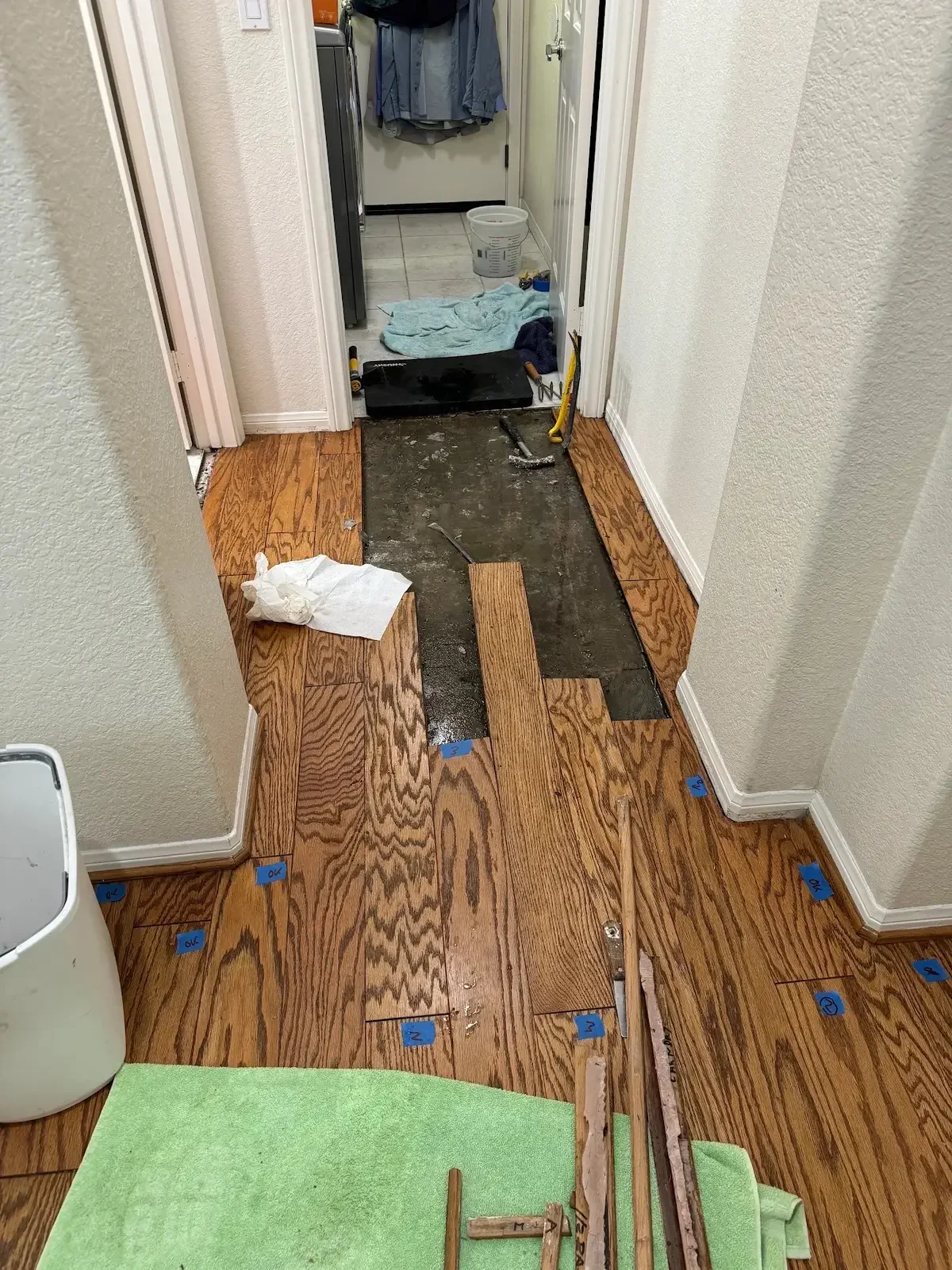
Extensive mold growth behind the shower wall of this 1970s Carlsbad Village home was caused by a slow leak in the shower pan. We contained the area, removed affected drywall and insulation, treated framing with antimicrobial solution, and passed post-remediation clearance testing.
Crawl Space Mold Remediation
Poor ventilation and a leaking foundation drain allowed mold to colonize floor joists in this Downtown Vista home. Our team set up HEPA-filtered negative air containment, removed contaminated insulation, treated all wood surfaces, and installed a vapor barrier to prevent recurrence.
What Homeowners Should Know About Mold Remediation
One of the most common misconceptions about mold is that killing it solves the problem. Bleach, vinegar, and over-the-counter mold sprays may kill surface mold on non-porous materials, but they do not address mold that has colonized porous substrates like drywall, wood, and insulation. Even dead mold spores remain allergenic and can continue to cause respiratory symptoms. The IICRC S520 standard for professional mold remediation requires physical removal of contaminated porous materials, not just surface treatment. This is why remediation involves cutting out and disposing of affected drywall and insulation rather than simply spraying chemicals on visible growth. The goal is to return the indoor environment to normal fungal ecology, meaning the types and concentrations of mold spores inside should match what is found in the outdoor air.
The role of containment during remediation cannot be overstated. A single square foot of mold-contaminated drywall can release millions of spores when disturbed during demolition. Without proper containment and negative air pressure, those spores travel through the house via natural air currents and HVAC systems, potentially contaminating rooms that were previously clean. This is the primary reason why DIY mold removal frequently makes the problem worse. Professional containment uses sealed polyethylene barriers and HEPA-filtered negative air machines to ensure that every spore released during removal is captured and filtered, not redistributed. Post-remediation clearance testing by an independent lab confirms that the containment strategy worked and that the air in your home is safe.
Homeowners in North San Diego County should be aware that coastal humidity plays a significant role in mold risk, even without a water damage event. Homes within a few miles of the coast, particularly in Carlsbad, Encinitas, Oceanside, and Del Mar, experience sustained relative humidity levels above 60 percent during marine layer conditions from May through September. When this humid air enters cooler interior spaces such as closets on exterior walls, poorly ventilated bathrooms, or enclosed crawl spaces, condensation forms and creates ideal conditions for mold growth. Ensuring adequate ventilation, using bathroom exhaust fans that vent to the exterior, and maintaining indoor humidity below 55 percent with dehumidification are the most effective preventive measures.
Mold Removal Throughout North San Diego County
We provide mold removal services to homes and businesses across the region.
Trusted by Carlsbad Families
Don't just take our word for it. See what our customers have to say.
5 · 121 reviews on Google
"Tamarack responded within 30 minutes when our pipe burst at 2 AM. Their team was professional, efficient, and made a stressful situation much easier to handle. Robert and his crew are the best!"
"We had mold in our bathroom that we didn't even know about. Tamarack found it, removed it safely, and made sure it wouldn't come back. Great communication throughout the entire process."
"After a small kitchen fire, I was devastated. The Tamarack team not only restored my kitchen but helped me navigate the insurance process. They truly care about their customers."
Related Services
We provide comprehensive restoration for all your needs.
Available 24/7
Need Mold Removal? We Respond in 60 Minutes.
Mold Removal FAQs
Common questions about mold removal
Get Help Now
60-minute emergency response
Your information is secure and never shared