Professional Flood Cleanup in North San Diego County
Rapid flood response to minimize damage and restore your property.
Get Help Now
60-minute emergency response
Your information is secure and never shared
Why Flood Cleanup Requires Professional Attention
Flood water is especially destructive because it often contains contaminants, sewage, chemicals, and debris. Category 3 "black water" from floods poses serious health risks and requires specialized handling. The longer flood water sits, the more damage it causes—and the greater the health hazard becomes.
Flood cleanup requires rapid response, proper safety protocols, and thorough sanitation. We extract flood water quickly, remove contaminated materials safely, and sanitize your property completely. Our goal is to minimize damage, eliminate health hazards, and restore your property to a safe, livable condition.
Our Flood Cleanup Process
IICRC-certified approach to completely restore your property.
Safety Assessment
We evaluate hazards including electrical, structural, and contamination risks before entering.
Water Extraction
Powerful pumps remove standing flood water as quickly as possible.
Contaminated Material Removal
Porous materials that absorbed flood water (carpet, drywall) are safely removed.
Cleaning & Sanitization
All salvageable surfaces are cleaned with antimicrobial and antibacterial treatments.
Structural Drying
Industrial dehumidifiers and air movers dry the structure completely.
Restoration
We replace removed materials and restore your property to pre-flood condition.
Warning Signs
Watch for these signs that you may need flood cleanup:
- Weather warnings and alerts
- Rising water levels nearby
- Water seeping under doors
- Backed up drains
- Saturated ground around foundation
Common Causes
Flood Cleanup is often caused by:
- Heavy rain and storms
- Flash flooding
- River or creek overflow
- Storm surge
- Dam or levee failure
- Rapid snowmelt
Why Choose Tamarack for Flood Cleanup?
Contamination Experts
We're trained in handling category 3 black water safely, protecting your family and our team.
Complete Sanitation
We don't just dry—we sanitize and disinfect to eliminate bacteria and health hazards.
Storm Damage Experience
We've helped hundreds of homeowners recover from floods and storm damage.
When to Call for Flood Cleanup
Recognize these situations? Call Tamarack at (760) 500-2211 for immediate help.
Storm Water is Entering Your Home
Heavy rain or a sudden storm has pushed water through doorways, window wells, or foundation cracks and it is pooling on your floors. Even a quarter inch of standing water can saturate carpet padding and wick into drywall within minutes. Shut off electricity to affected areas if you can do so safely and call us immediately so extraction can begin before structural damage sets in.
Your Sump Pump Has Failed
You hear the pump cycling without discharging, or it has stopped running entirely while groundwater continues to rise in your basement or crawl space. A failed sump pump during a rain event can flood a below-grade area in under an hour. Call us right away so we can deploy portable submersible pumps and get the water out before it reaches finished walls and stored belongings.
Streets Near Your Home Are Flooding
Water is sheeting across roadways and approaching your property line, or storm drains in your neighborhood are overflowing. Rising street-level water carries oil, chemicals, and debris that qualify it as Category 2 or Category 3 contamination once it enters your home. Act before the water breaches your threshold by sandbagging entry points and contacting us for standby rapid response.
A Retaining Wall Has Failed and Mud is Flowing Toward Your House
Saturated hillside soil has collapsed a retaining wall and mud-laden water is moving toward your foundation. This is common on sloped lots throughout Carlsbad, Encinitas, and San Marcos after prolonged rain. The combination of hydrostatic pressure and sediment load can crack foundation walls, so immediate water diversion and extraction are critical.
Your Washing Machine Supply Line Has Burst
A braided steel or rubber supply hose has ruptured while you were away, and the washer has been flowing unchecked for hours. A single supply line can discharge five to seven gallons per minute, meaning a home left unattended for a workday can take on thousands of gallons. Shut off the water at the main valve and call us to begin high-volume extraction before subfloor layers delaminate.
You Returned Home to Standing Water After Vacation
You opened the door to find inches of water throughout your ground floor with no obvious cause. The longer water sits undiscovered, the more it migrates into wall cavities, cabinetry, and HVAC ductwork. Time is the most important factor in limiting secondary damage, so contact us for an emergency inspection and extraction plan while you document conditions for your insurer.
Your Water Heater Has Ruptured
A corroded or aging water heater tank has cracked and released its full 40- to 80-gallon capacity onto the floor, with supply pressure continuing to feed the leak. The water may be hot enough to accelerate bacterial growth in organic building materials. Turn off the cold-water inlet valve on top of the unit and call us to extract the water and assess whether it has reached adjacent rooms through shared walls.
An Upstairs Toilet or Fixture Overflowed and Water is Coming Through the Ceiling
Water stains, dripping, or bulging drywall on a lower-level ceiling indicate that an upper-floor overflow has saturated the subfloor and is migrating downward. Ceiling drywall that absorbs enough water can collapse without warning, creating a safety hazard. Do not stand directly beneath the affected area and call us so we can relieve the trapped water safely and begin drying both levels.
Your Yard is Flooding and Water is Approaching Your Foundation Vents
Pooling water in your yard has risen high enough to threaten crawl space vents or low-set windows. Once flood water enters a crawl space it is extremely difficult to dry without professional equipment, and the moisture can compromise floor joists and insulation. Contact us before the water breaches your foundation so we can advise on temporary barriers and deploy if entry occurs.
A Fire Sprinkler Head Has Accidentally Discharged
A sprinkler head activated due to mechanical damage, a cooking incident, or a nearby heat source and is discharging 15 to 25 gallons per minute of pressurized water. The flow will not stop until the riser valve is shut off, and by that time hundreds of gallons may have soaked into floors and walls. Locate and close the sprinkler riser valve, then call us for immediate extraction and controlled drying.
What's Included in Our Flood Cleanup Service
Detailed breakdown of our professional process, equipment, and timeline.
High-Volume Water Extraction
We deploy truck-mounted extraction units and portable submersible trash pumps capable of removing hundreds of gallons per minute from your property. Weighted extraction tools pull water from carpet, pad, and hard-surface flooring simultaneously. In most residential floods we can complete primary extraction within two to four hours of arrival, depending on volume and access.
Equipment: Truck-mounted extractors, submersible trash pumps, weighted carpet extraction wands
Contamination Assessment and Water Classification
Every flood is classified by water source contamination level according to IICRC S500 standards. Our technicians test on site to determine whether the water is Category 1 (clean supply), Category 2 (gray water from appliances or rain runoff), or Category 3 (sewage or exterior flood water carrying biological contaminants). Classification determines the decontamination protocol, which materials can be saved, and how your insurance claim is documented.
Equipment: ATP bioluminescence meters, pH test strips, turbidity meters
Structural Drying with Daily Monitoring
Once standing water is removed we install commercial-grade dehumidifiers and high-velocity air movers in a calculated drying plan based on square footage, material types, and ambient conditions. Moisture readings are taken at mapped points every 24 hours using pin-type and pinless meters. The typical structural dry-out for a flood takes three to five days, and we do not pull equipment until readings confirm that materials are at or below their dry standard.
Equipment: LGR dehumidifiers (80-130 pint capacity), centrifugal air movers, Tramex and Delmhorst moisture meters
Content Pack-Out and Inventory
Salvageable personal belongings in the flood zone are carefully inventoried, photographed, and packed into labeled bins for transport to our climate-controlled facility. Items are cleaned, deodorized, or sent to specialty vendors for restoration. A detailed inventory list is provided for your insurance adjuster, and contents are returned once your home is fully dried and rebuilt.
Antimicrobial Treatment and Mold Prevention
All flood-affected surfaces that will remain in place are treated with EPA-registered antimicrobial solutions to inhibit mold colonization during the drying period. If Category 2 or Category 3 water was involved, we apply a two-stage treatment: an initial biocide followed by a residual protectant. Treatments are logged and included in the scope documentation provided to your carrier.
Equipment: Electrostatic sprayers, EPA-registered antimicrobial and biocide solutions
Controlled Demolition of Non-Salvageable Materials
Drywall, insulation, carpet pad, and other porous materials that absorbed flood water beyond salvageable thresholds are cut out and removed in a controlled manner to prevent cross-contamination of unaffected areas. We establish containment barriers with poly sheeting and negative air pressure before demo begins. Cut lines are made at standard two-foot or four-foot increments above the flood line so new material integrates cleanly during reconstruction.
Equipment: HEPA-filtered negative air machines, 6-mil poly containment, reciprocating saws
Insurance Documentation and Claims Coordination
We photograph and document every phase of the flood cleanup using industry-standard Xactimate estimating software, which most major carriers accept directly. Moisture maps, equipment logs, contamination test results, and before-and-after photos are compiled into a claim package. Our project managers communicate directly with your adjuster to streamline approvals and minimize out-of-pocket delays.
Reconstruction and Final Restoration
Once drying is verified and clearance testing is complete, our in-house construction team handles all rebuild work including drywall hanging and finishing, flooring installation, baseboard and trim replacement, painting, and texture matching. Keeping extraction through reconstruction under one company eliminates handoff delays and ensures warranty continuity across the entire project.
Why Our Flood Cleanup Stands Out
Recent Flood Cleanup Projects
Real before-and-after results from local homes. Hover to see the before photos.
Atmospheric River Flood Damage
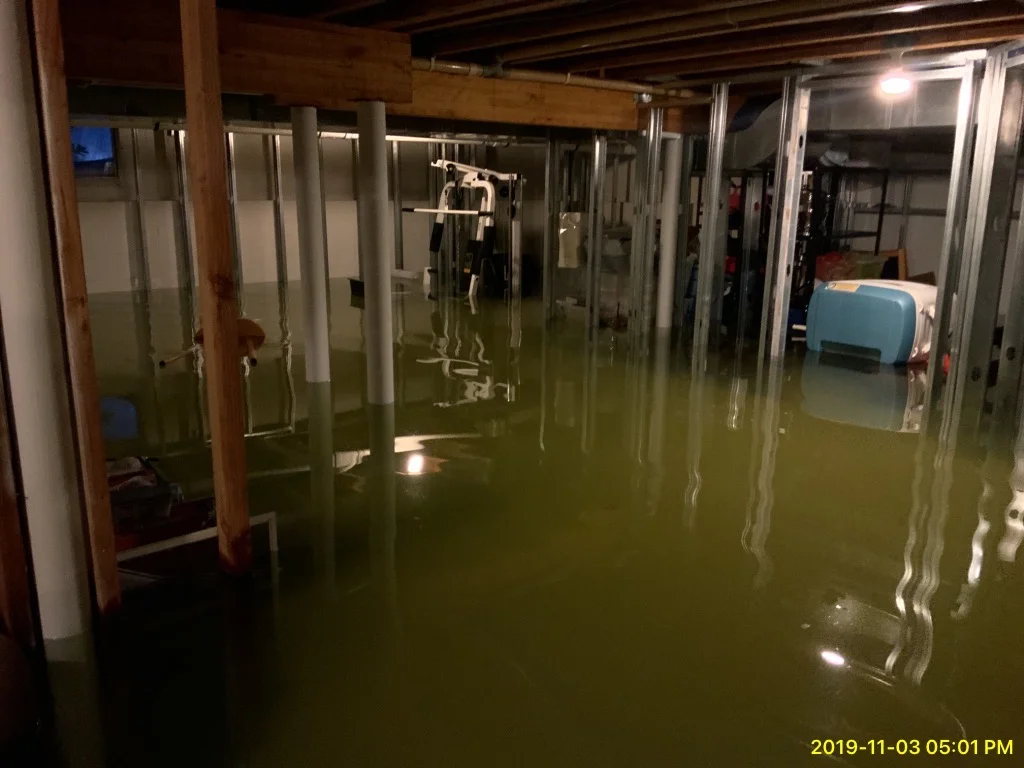
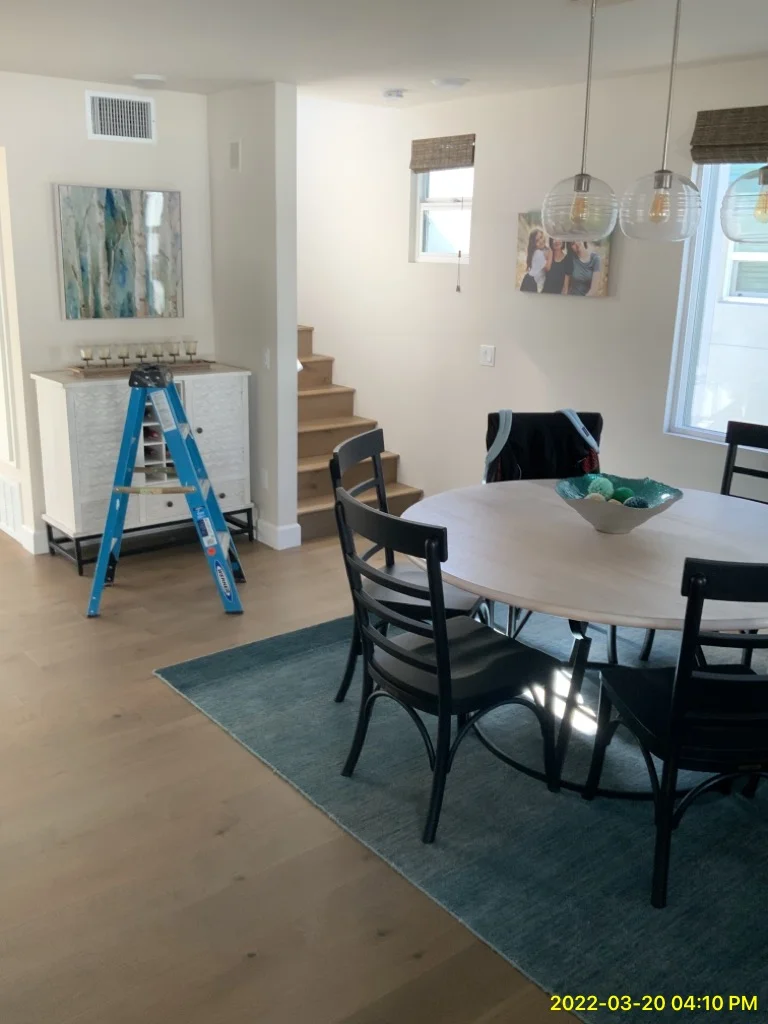
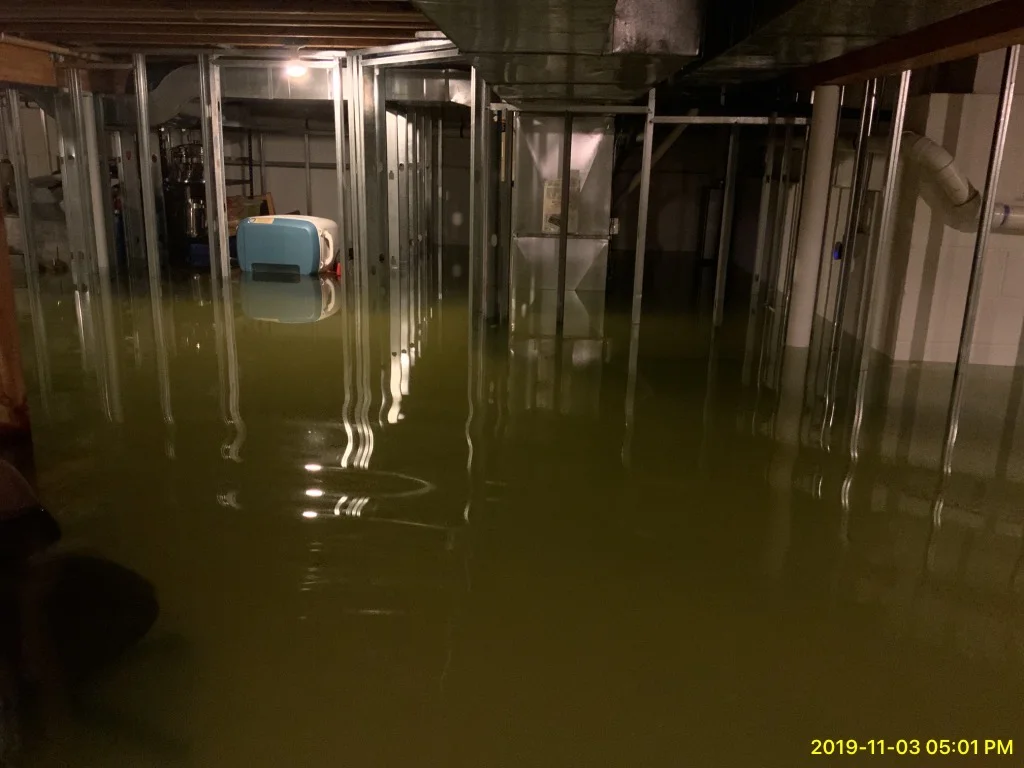
Heavy rainfall from a January atmospheric river overwhelmed storm drains and flooded the ground floor of this home near Buena Vista Lagoon. We extracted Category 3 water, removed all porous materials below the flood line, sanitized with antimicrobial treatments, and rebuilt the affected areas.
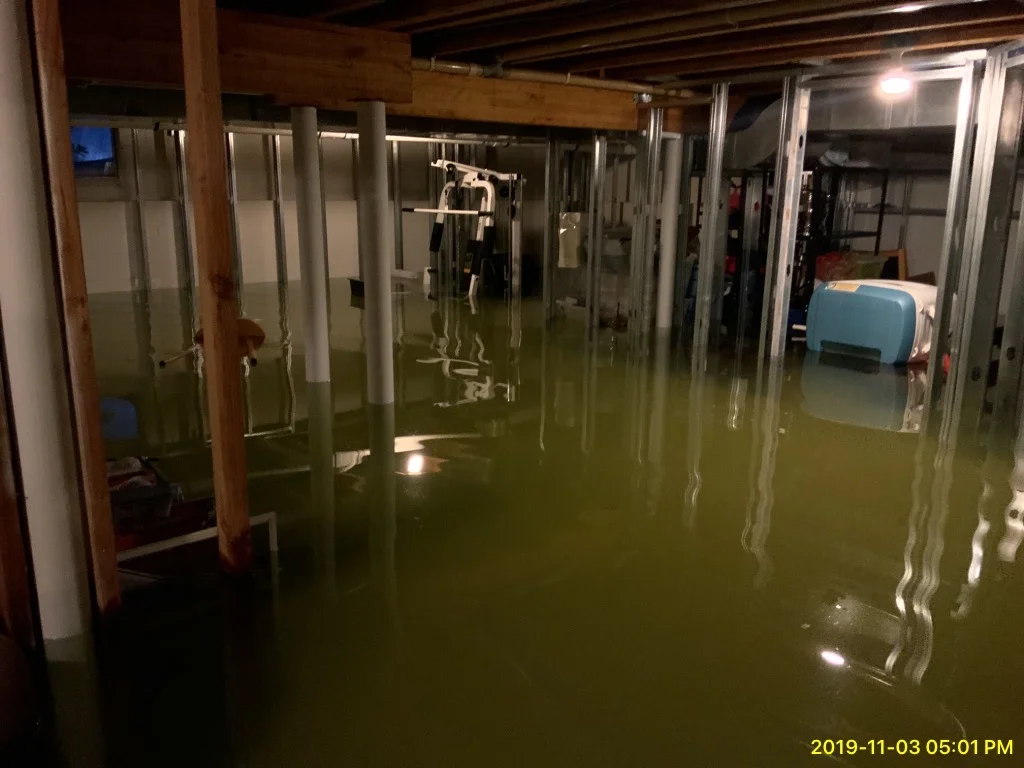
Flash Flood Garage & Basement
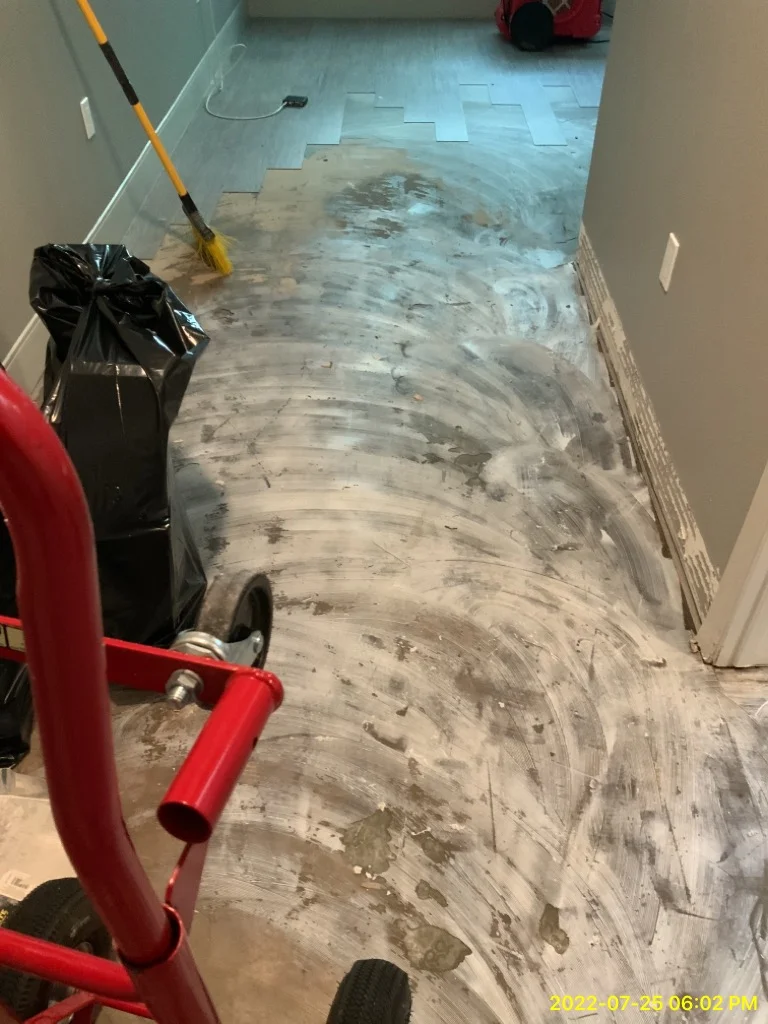
A sudden downpour sent runoff through the garage and into the finished basement of this Shadowridge home. We pumped out standing water, removed soaked carpet and padding, dried the concrete slab and wall cavities, and replaced all affected materials.
Understanding Flood Water Categories and Why They Matter
Not all floods are equal, and the single most important factor in determining the scope, cost, and health risk of a flood cleanup is the contamination category of the water involved. The IICRC S500 Standard for Professional Water Damage Restoration defines three categories. Category 1 is clean water from a broken supply line, faucet, or water heater and poses no substantial health risk. Category 2, often called gray water, contains significant contamination from sources like washing machine overflow, dishwasher discharge, or rainwater that has contacted soil and organic debris. Category 3, known as black water, includes sewage backups, rising exterior flood water, and any water that has contacted biological or chemical contaminants. The category directly determines which building materials can be saved and which must be removed, the level of personal protective equipment our technicians wear, and the decontamination protocols we follow.
Flood water behaves differently from a contained plumbing leak because it typically enters the structure at floor level and spreads laterally through every porous material it touches. Carpet acts like a sponge, pulling water across an entire room in minutes. Drywall wicks moisture upward well above the visible water line, often 12 to 18 inches higher. Hardwood flooring absorbs water from below through the subfloor, causing cupping and buckling that may not appear for hours or days. Because flood water moves through so many materials simultaneously, the drying process is more complex and requires more equipment than a localized pipe leak affecting a single wall cavity.
The contamination risk of flood water also escalates over time. Category 1 water that sits for more than 48 hours is reclassified to Category 2 because standing water at room temperature supports rapid bacterial growth. Category 2 water that remains for 72 hours or more can be reclassified to Category 3. This time-dependent escalation is why rapid response is not just a convenience but a direct cost and health concern. A flood that is extracted and dried within the first 24 hours may allow carpet, pad, and drywall to be saved, keeping the project in the $3,000 to $6,000 range. The same flood left for three days may require full material removal, antimicrobial treatment, and rebuild, pushing costs to $15,000 or more. Calling a certified restoration company immediately is the single best way to limit both expense and health exposure.
Flood Cleanup Throughout North San Diego County
We provide flood cleanup services to homes and businesses across the region.
Trusted by Carlsbad Families
Don't just take our word for it. See what our customers have to say.
5 · 121 reviews on Google
"Tamarack responded within 30 minutes when our pipe burst at 2 AM. Their team was professional, efficient, and made a stressful situation much easier to handle. Robert and his crew are the best!"
"We had mold in our bathroom that we didn't even know about. Tamarack found it, removed it safely, and made sure it wouldn't come back. Great communication throughout the entire process."
"After a small kitchen fire, I was devastated. The Tamarack team not only restored my kitchen but helped me navigate the insurance process. They truly care about their customers."
Related Services
We provide comprehensive restoration for all your needs.
Available 24/7
Need Flood Cleanup? We Respond in 60 Minutes.
Flood Cleanup FAQs
Common questions about flood cleanup
Get Help Now
60-minute emergency response
Your information is secure and never shared