A house fire is one of the most devastating events a homeowner can experience. Beyond the emotional toll, the practical reality of fire damage restoration can feel overwhelming. Understanding the process helps you know what to expect and make better decisions during a difficult time.
Understanding Fire Damage
Fire damage goes far beyond the area directly burned by flames. A house fire typically causes three types of damage:
- Fire damage — structural destruction and charring from direct flame contact
- Smoke and soot damage — residue deposits on surfaces throughout the home, often far from the fire itself
- Water damage — from firefighting efforts, which can be as destructive as the fire
All three must be addressed for complete restoration. Ignoring smoke damage or water damage leads to long-term problems including persistent odors, corrosion, and mold growth.
The Fire Damage Restoration Timeline
Phase 1: Emergency Response (Hours 1-24)
What happens:
The first priority is securing your property and preventing further damage.
- Fire department clearance — you cannot enter your home until the fire department releases it. This ensures the structure is safe and the investigation is complete.
- Emergency board-up — openings created by the fire or firefighting (broken windows, damaged doors, holes in the roof) are boarded up to secure the property against weather, animals, and unauthorized entry.
- Roof tarping — if the roof is compromised, tarps prevent rain from causing additional water damage.
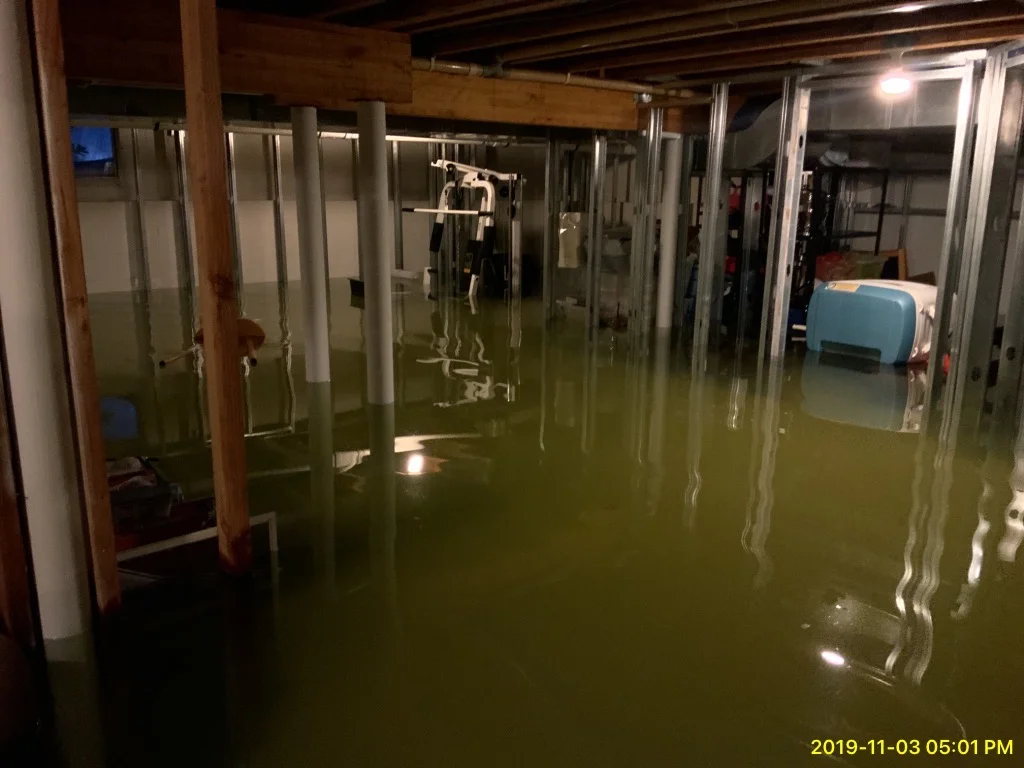
- Water extraction — firefighting water is extracted to begin preventing mold growth.
What you should do:
- Contact your insurance company and file a claim
- Find temporary housing if the home is uninhabitable (your policy likely covers this under “additional living expenses”)
- Secure important documents, medications, and essentials if safe to retrieve them
- Do not attempt to clean anything yet
Phase 2: Damage Assessment (Days 1-3)
What happens:
A thorough assessment documents all damage for insurance purposes and creates the restoration plan.
- Structural inspection — engineers or qualified restoration professionals evaluate the structural integrity of the building
- Content inventory — all damaged personal property is documented and categorized as salvageable, cleanable, or total loss
- Scope of work — a detailed restoration plan is created, outlining every step needed to restore the property
- Insurance coordination — the assessment and scope are shared with your insurance adjuster
What you should do:
- Meet with the restoration team and your insurance adjuster on-site if possible
- Provide a list of damaged personal property with approximate values
- Ask questions about the timeline and process
- Keep all receipts for emergency expenses (hotel, food, clothing)
Phase 3: Smoke and Soot Removal (Days 3-10)
What happens:
This is often the most labor-intensive phase. Smoke and soot are corrosive and can cause permanent damage if not addressed quickly.
- Surface cleaning — every surface in the home is cleaned using methods appropriate for the material (dry sponging, wet cleaning, or abrasive cleaning depending on the type of soot)
- HVAC cleaning — the heating and cooling system is cleaned to remove soot from ducts, registers, and the unit itself
- Content cleaning — salvageable personal items are cleaned, some on-site and some at a specialized facility
- Odor treatment — thermal fogging, ozone treatment, and hydroxyl generators eliminate smoke odor at the molecular level
What you should know:
Soot is acidic and corrosive. If left on surfaces, it permanently discolors plastics, etches metal, and stains stone and marble. This is why the soot removal timeline is critical. The sooner cleaning begins, the more items and surfaces can be saved.
Phase 4: Structural Drying (Days 3-7, overlaps with Phase 3)
What happens:
Firefighting water must be completely removed to prevent mold growth and structural damage.
- Water extraction using commercial equipment
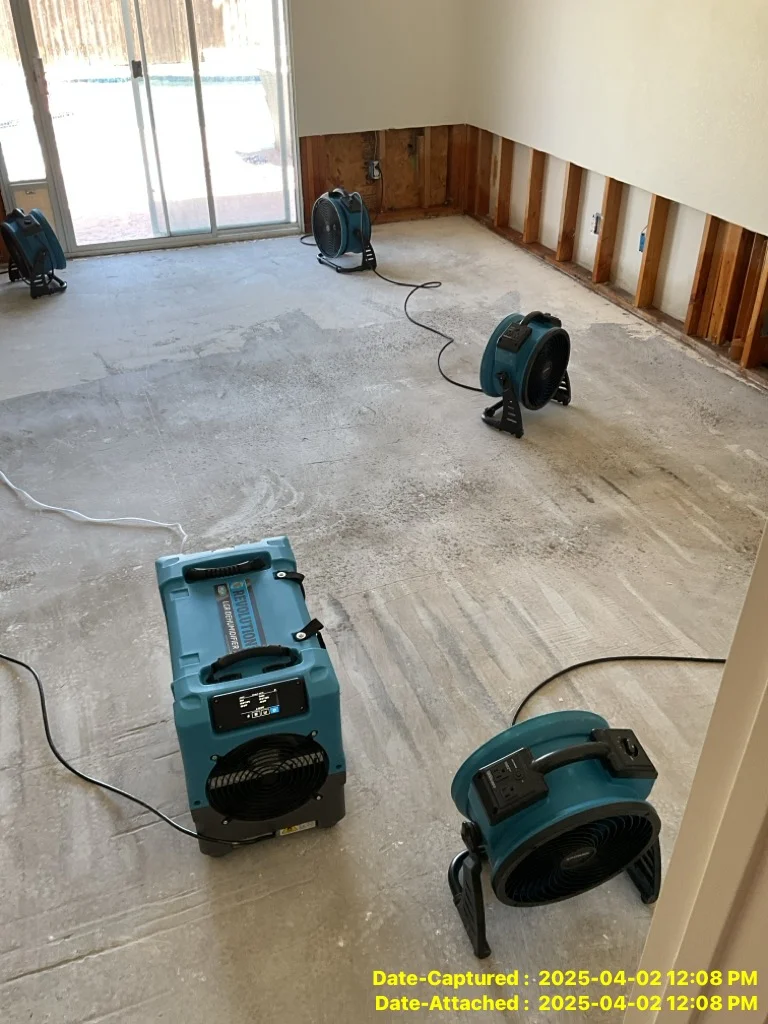
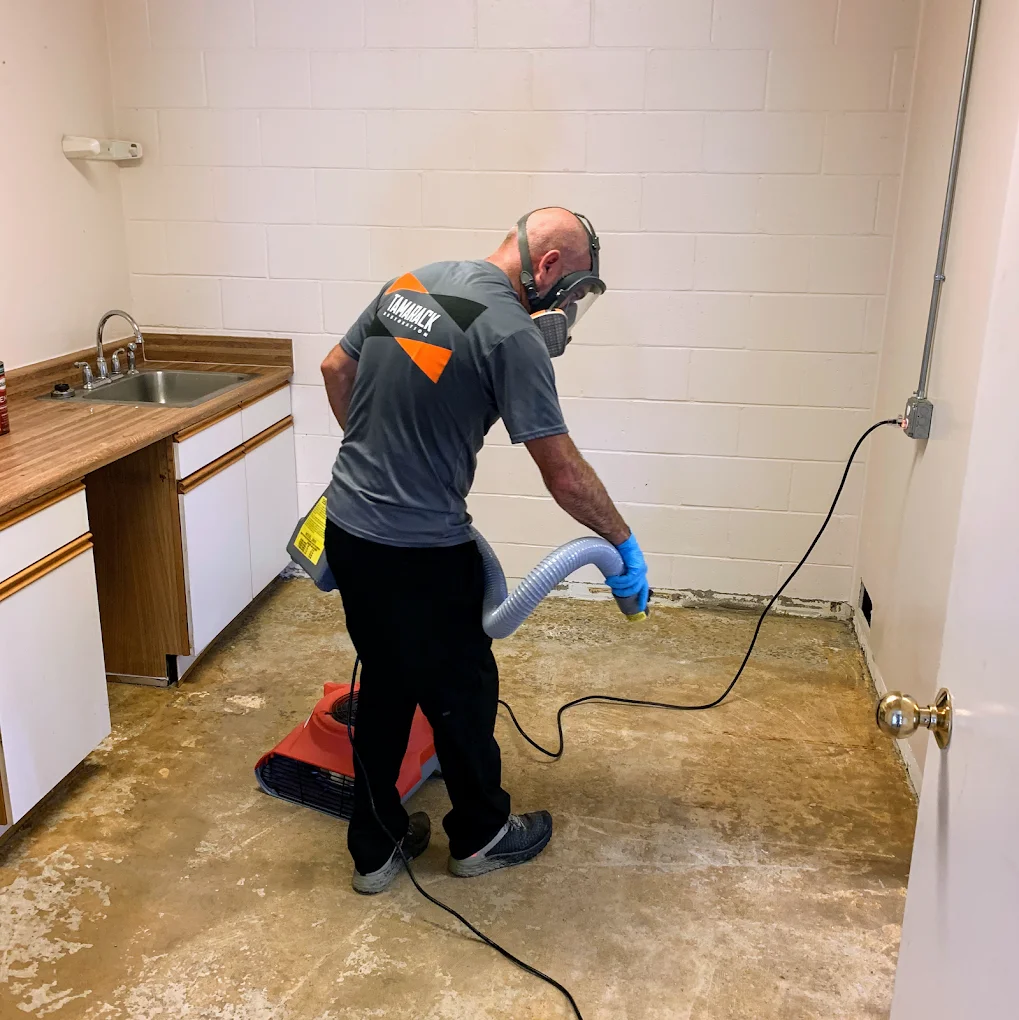
- Structural drying with industrial dehumidifiers and air movers
- Moisture monitoring with meters and thermal imaging to confirm complete drying
- Anti-microbial treatment to prevent mold growth in affected areas
This phase overlaps with smoke cleaning. Drying equipment runs continuously while other restoration work proceeds.
Phase 5: Demolition of Unsalvageable Materials (Days 7-14)
What happens:
Materials too damaged to restore are carefully removed.
- Damaged drywall is cut out and removed
- Burned framing is evaluated—some members can be treated and reinforced, others must be replaced
- Destroyed flooring is removed
- Insulation in affected areas is replaced
- Debris removal follows proper disposal procedures
All removed materials are documented for the insurance claim.
Phase 6: Reconstruction (Weeks 2-6+)
What happens:
This is the rebuild phase, where your home is restored to pre-loss condition—or better.
- Framing and structural repairs
- Electrical and plumbing repairs or updates as needed
- Drywall installation and finishing
- Painting with odor-sealing primer
- Flooring installation
- Cabinet and fixture installation
- Final cleaning and inspection
The timeline depends on the scope of damage. A kitchen fire with contained damage might take 4-6 weeks for reconstruction. A more extensive fire affecting multiple rooms could take several months.
Working With Your Insurance
Fire damage claims are among the largest homeowner insurance claims. Here’s how to protect your interests:
What’s Typically Covered
- Structural damage from fire, smoke, and water
- Personal property damage (furniture, clothing, electronics)
- Additional living expenses (hotel, meals, laundry) while displaced
- Debris removal
- Landscaping damage in some cases
What May Not Be Covered
- Damage from arson by the homeowner
- Vacant properties (typically over 60 days unoccupied)
- Business property in a residential policy
- Items exceeding coverage limits (jewelry, art, firearms—these need riders)
Tips for a Smooth Claim
- Document everything before any cleanup begins
- Keep all receipts for emergency expenses
- Don’t dispose of damaged items until the adjuster has seen them
- Get a professional scope of work from a restoration company—not just the insurance company’s estimate
- Understand your policy — know the difference between replacement cost and actual cash value coverage
- Keep a claim journal documenting all conversations with dates, names, and summaries
How Long Does Fire Restoration Take?
Typical timelines based on severity:
| Severity | Example | Timeline |
|---|---|---|
| Minor | Small kitchen fire, contained to one area | 2-4 weeks |
| Moderate | Room fire with smoke damage throughout | 4-8 weeks |
| Major | Multi-room fire with structural damage | 2-6 months |
| Severe | Near-total loss requiring significant reconstruction | 6-12 months |
These are general estimates. Your restoration company should provide a specific timeline based on your damage assessment.
What You Can Do After a Fire
While restoration professionals handle the heavy work, here are things you can do:
- Inventory your belongings for the insurance claim
- Secure important documents — contact your bank, replace IDs if lost
- Notify your mortgage company — they may need to be involved in insurance payouts
- Change your mailing address temporarily if displaced
- Take care of yourself and your family — fire trauma is real. Take advantage of Red Cross services and consider counseling resources
Get Fire Damage Help in North San Diego County
If your home has suffered fire damage in Carlsbad, Oceanside, Vista, San Marcos, or anywhere in North San Diego County, Tamarack Restoration provides complete fire and smoke damage restoration. From emergency board-up to final reconstruction, we handle every step. Call (760) 500-2211 for immediate response.